
Module 3 of 6
Food, Beverage and Allergen Safety
Culinary terminology, experiential menu descriptions, and zero-compromise allergen safety protocols.
Describing dishes — cooking methods and what they mean
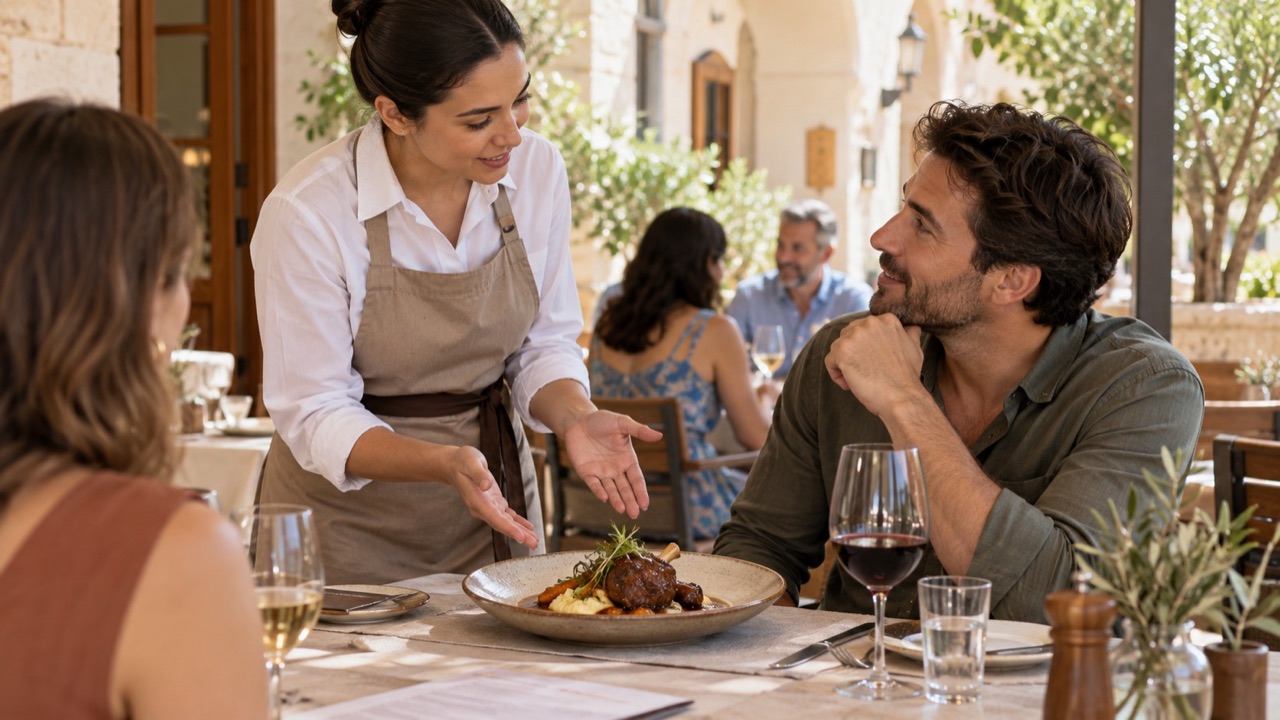
“It's cooked slowly in the oven — very tender, falls apart easily.”
Describing braised or slow-cooked meats experientially
“It's served raw and thinly sliced — that's the carpaccio. Very fresh, light texture.”
Explaining raw or cured appetizers clearly to diners
“The sauce is a reduction of the cooking juices — quite rich and concentrated.”
Explaining culinary reductions and jus in accessible terms
“Would you prefer something lighter? The sea bass is steamed — very delicate.”
Recommending lighter cooking methods to health-conscious diners
“Does that come as an accompaniment to your main, or would you prefer it served as a starter?”
Clarifying course sequencing and dish accompaniment
Allergies — the one place to be direct

“Is this an allergy or a preference? I want to make sure I give the kitchen the right information.”
Confirming medical severity before sending an order to the kitchen
“I will not guess with your health. Let me check our allergen matrix with the chef and come straight back to you.”
Reassuring the guest while verifying ingredients directly with kitchen leadership
“This dish contains no nuts as an ingredient. However, our kitchen handles nuts, and we cannot guarantee a nut-free preparation environment for severe allergies.”
Explaining cross-contact risk honestly to guests with severe allergies
“Our kitchen has a severe nut allergy on table 4 — anaphylaxis risk, separate grill pan, no cross-contact.”
Issuing high-priority allergen warnings to back-of-house kitchen staff
“While this dish contains no gluten ingredients, our kitchen handles wheat flour and we cannot guarantee a sterile environment for severe celiacs.”
Transparent allergen disclosure for celiac cross-contamination risks
“May I clear these plates for you, or are you still enjoying?”
Politely clearing courses without rushing the table's dining pace
Quick Shift Check
What should you do the moment a guest arrives, even if you're in the middle of another task?
Already know this material?
You can take the 20-question exam any time — no need to finish every module first.