
The cocktail notebook · Vodka
Moscow Mule
Ginger spice, lime and carbonation with a neutral vodka base. A ginger highball made by build.
- Base
- vodka; IBA names Smirnoff
- Method
- Build
- Glass
- Rocks glass or suitable lined food-contact mule cup
- Yield
- One drink
Recipe reference: IBA reference recipe.
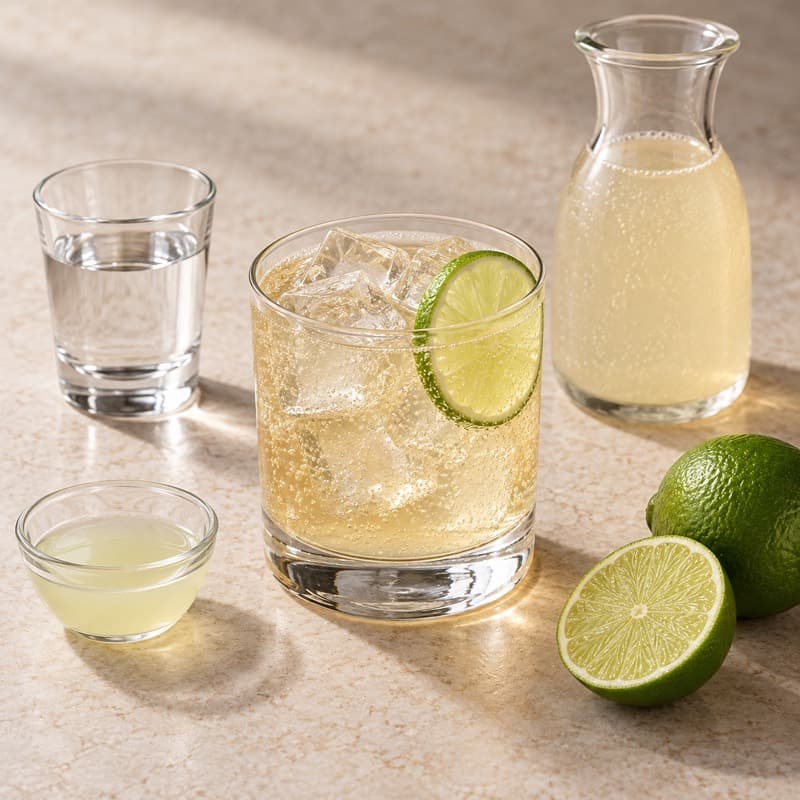
Moscow Mule recipe
1 serving · IBA reference recipeMillilitres control this recipe. US fluid ounces are rounded to the nearest quarter ounce for convenience and are not a different recipe ratio. Dashes, spoons, leaves and other non-liquid measures are listed as written.
| Measure | Ingredient |
|---|---|
| 45 ml≈ 1.5 US fl oz | vodka; IBA names Smirnoff |
| 120 ml≈ 4 US fl oz | chilled ginger beer |
| 10 ml≈ 0.25 US fl oz | fresh lime juice |
Ice: Fresh cubed ice. Garnish: Lime slice.
Learning bar service? Continue with the Moscow Mule in module 1 of the free course →
How to make it
- Fill the serving glass with fresh ice.
- Measure vodka and ginger beer into it.
- Add lime juice and lift gently once.
- Garnish with lime and serve promptly.
Why it works: Ginger beer carries the main flavour; a clear rocks glass makes the drink easy to inspect.
Common mistakes, useful fixes
Weak ginger
check that ginger beer, not ginger ale, was used.
Flat
use cold freshly opened mixer.
Unbalanced acidity
measure lime instead of relying on garnish.
Serving the guest
What to tell the guest
Despite the name, the drink’s modern history is American.
Dietary and product checks
Ginger beers vary in ingredients and alcohol content; check the actual product, especially for alcohol-free orders.
Variations
- A bourbon-based Mule is a separate spirit variation.
- Ginger ale substitution produces a milder house adaptation; tell the guest.
Where does the Moscow Mule come from?
Origin: United States, early 1940s; commonly dated to 1941. (Brand account; competing details of the founding scene)
The Moscow Mule’s name can send a learner in the wrong geographical direction. It developed in the United States, where Smirnoff’s promotional history dates it to 1941. The familiar story connects vodka and ginger beer sales, though accounts vary over the people and meeting place. This course does not assign a unique inventor. Nor does it require a copper mug: the IBA also allows a rocks glass. The important flavour comes from ginger beer and lime. Ginger ale is a different mixer, and the two should not be silently treated as interchangeable.
Moscow Mule questions
Must it use a copper mug?
No. A rocks glass is an accepted option.
How much ginger beer is used?
120 ml.
From a recipe to a repeatable skill
Learn the method behind the order.
Moscow Mule is a required study in Essential Cocktails & Bar Foundations, module 1: Station, measures and built drinks. Handle ginger beer, citrus and carbonation; a copper mug is not a learning requirement.
The course is free. An optional paid certificate tests knowledge in an online exam; it is not an observed practical assessment or an accredited bartending qualification.