
The cocktail notebook · Rum & cane spirit
Cuba Libre
Cola sweetness, lime acidity and light rum character. A highball made by build.
- Base
- white rum
- Method
- Build
- Glass
- Highball
- Yield
- One drink
Recipe reference: IBA reference recipe.
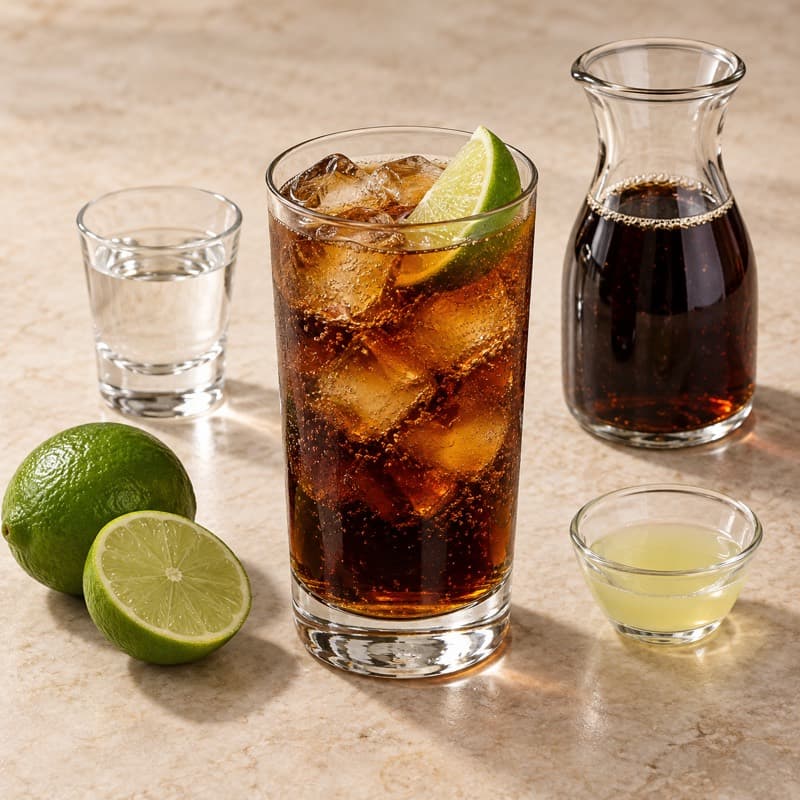
Cuba Libre recipe
1 serving · IBA reference recipeMillilitres control this recipe. US fluid ounces are rounded to the nearest quarter ounce for convenience and are not a different recipe ratio. Dashes, spoons, leaves and other non-liquid measures are listed as written.
| Measure | Ingredient |
|---|---|
| 50 ml≈ 1.75 US fl oz | white rum |
| 120 ml≈ 4 US fl oz | chilled cola |
| 10 ml≈ 0.25 US fl oz | fresh lime juice |
Ice: Fresh cubed ice, fill glass. Garnish: 1 lime wedge.
Learning bar service? Continue with the Cuba Libre in module 1 of the free course →
How to make it
- Fill the glass with fresh ice.
- Measure rum and lime juice into it.
- Add the cold cola and lift gently once.
- Finish with the lime wedge.
Why it works: Lime is part of the recipe, not merely decoration. Cola goes in last to protect bubbles.
Common mistakes, useful fixes
Too sweet
check that the lime juice was measured.
Flat
avoid warm cola and heavy stirring.
Wrong profile
do not substitute spiced rum without agreement.
Serving the guest
What to tell the guest
A Cuba Libre includes lime juice as well as rum and cola.
Dietary and product checks
Cola may contain caffeine. Check the exact mixer and any flavoured rum.
Variations
- Gold rum gives a different, often rounder flavour; label the variation.
- A different cola changes sweetness and acidity; test before adopting.
Where does the Cuba Libre come from?
Origin: Cuba, around the turn of the 20th century; Havana in the Bacardi account. (Brand account; precise invention not independently established)
Cuba Libre means “Free Cuba”. Bacardi’s account places the rum, cola and lime combination in Havana in 1900 and connects its name with a toast to freedom. Treat the exact founding scene as an attributed account, not an independently proven event. For service, the distinction from a loose rum-and-cola order is the measured lime juice. It adds acidity and fresh aroma to a sweet carbonated mixer. Recipes also differ over rum style: the IBA reference uses white rum, while Bacardi promotes a gold-rum version. Know which version your bar serves.
Cuba Libre questions
How much lime juice is in this specification?
10 ml.
Why add cola last?
It is carbonated; gentle final mixing retains more bubbles.
From a recipe to a repeatable skill
Learn the method behind the order.
Cuba Libre is a required study in Essential Cocktails & Bar Foundations, module 1: Station, measures and built drinks. Distinguish a lime-based specification from an unspecified rum-and-cola order.
The course is free. An optional paid certificate tests knowledge in an online exam; it is not an observed practical assessment or an accredited bartending qualification.