
The cocktail notebook · Gin
Gin & Tonic
Juniper-led, bitter-sweet, sparkling; lime adds fresh aroma. The measures are our house teaching specification; other bars may use different ratios.
- Base
- London dry gin
- Method
- Build
- Glass
- Highball, approximately 300–350 ml
- Yield
- One drink
Recipe reference: Original house specification.
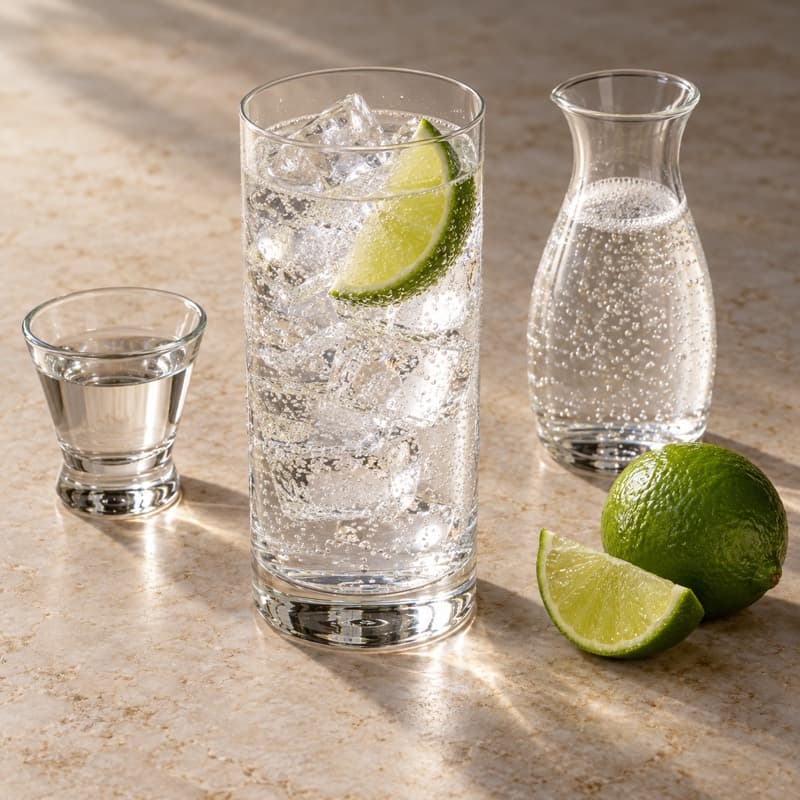
Gin & Tonic recipe
1 serving · Original house specificationMillilitres control this recipe. US fluid ounces are rounded to the nearest quarter ounce for convenience and are not a different recipe ratio. Dashes, spoons, leaves and other non-liquid measures are listed as written.
| Measure | Ingredient |
|---|---|
| 50 ml≈ 1.75 US fl oz | London dry gin |
| 150 ml≈ 5 US fl oz | chilled tonic water |
Ice: Fresh cubed ice, fill glass. Garnish: 1 lime wedge.
Learning bar service? Continue with the Gin & Tonic in module 1 of the free course →
How to make it
- Fill the glass with fresh ice; measure the gin over it.
- Pour the cold tonic slowly down the inside of the glass.
- Lift once gently with a bar spoon to combine.
- Add a lime wedge with clean tongs and serve promptly.
Why it works: Cold mixer and gentle handling preserve carbonation. The house 1:3 ratio makes a repeatable starting point.
Common mistakes, useful fixes
Flat drink
open tonic close to service and avoid vigorous stirring.
Weak aroma
check gin identity and measure rather than guessing.
Watery finish
use cold ingredients and a full ice fill.
Serving the guest
What to tell the guest
Tonic contributes both bitterness and sweetness; soda water does neither.
Dietary and product checks
Check tonic and garnish labels and cross-contact controls; this is not an allergen-free guarantee.
Variations
- A lemon garnish changes the aroma without changing the base ratio.
- A 1:2 gin-to-tonic ratio is a stronger-tasting house variation; confirm preference.
Where does the Gin & Tonic come from?
Origin: British / colonial Indian context; 19th century. No single inventor established. (Archival reference; invention uncertain)
Tonic has a more interesting history than the familiar soldier-and-gin tale suggests. Kew researchers trace its bitterness to quinine from South American cinchona and identify an 1868 reference to gin and tonic at a race meeting in Lucknow, India. They found the standard medicinal origin legends difficult to verify. This links the drink to British colonial drinking culture without proving a single moment of invention. For a guest, the useful connection is botanical: juniper-led gin meets the bitter-sweet flavour of tonic. The modern drink is a refreshment, not a medicine.
Gin & Tonic questions
What mixer distinguishes this drink from a Gin Soda?
Tonic water: it contributes bitter-sweet flavour.
Why avoid shaking it?
Carbonation can create pressure in a sealed shaker and is lost through agitation.
From a recipe to a repeatable skill
Learn the method behind the order.
Gin & Tonic is a required study in Essential Cocktails & Bar Foundations, module 1: Station, measures and built drinks. Build a carbonated drink; match gin, tonic and garnish without changing the stated pour.
The course is free. An optional paid certificate tests knowledge in an online exam; it is not an observed practical assessment or an accredited bartending qualification.