
Module 4 of 6
Cutlery, pasta etiquette & table manners
Twirling long pasta with a fork alone, plate language, and essential courtesies.
Cutlery, pasta etiquette & table manners
The tines of the fork alone

“La pasta è perfettamente al dente!”
The pasta is perfectly al dente!
“Ci può portare una forchetta pulita?”
Could you bring us a clean fork?
“Questo piatto è una delizia.”
This dish is a delight.
The silent language of your plate
“Stiamo ancora finendo, grazie.”
We are still finishing, thank you.
“Abbiamo finito, può portare via, grazie.”
We have finished, you may clear, thank you.
“Tutto perfetto, grazie mille.”
Everything was perfect, thank you so much.
Buon appetito and toasting traditions
“Buon appetito a tutti!”
Enjoy your meal, everyone!
“Salute! / Cin cin!”
To your health! / Cheers!
“Grazie, altrettanto!”
Thank you, same to you!
Knives and cutlery in Italian luxury dining: navigating the formal mise en place
“Ci può portare un coltello da pesce?”
Could you bring us a fish knife?
“Questo coltello da bistecca taglia benissimo.”
This steak knife cuts wonderfully.
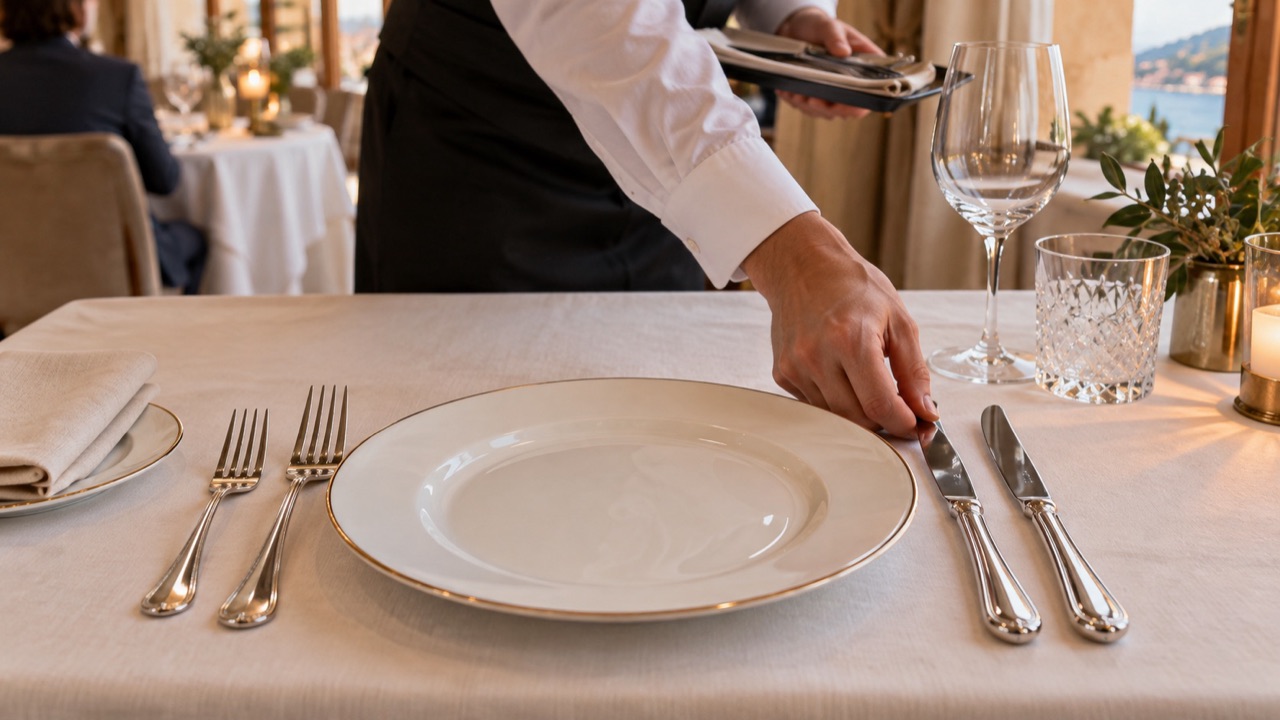
“Si usano le posate partendo dall'esterno.”
You use the cutlery starting from the outside.
Italian Luxury Cutlery & Knives Guide
Everything you need to dine with total poise in a Michelin-starred or fine dining restaurant in Italy: specialized knives, forks, spoons, and the silent language of the plate.
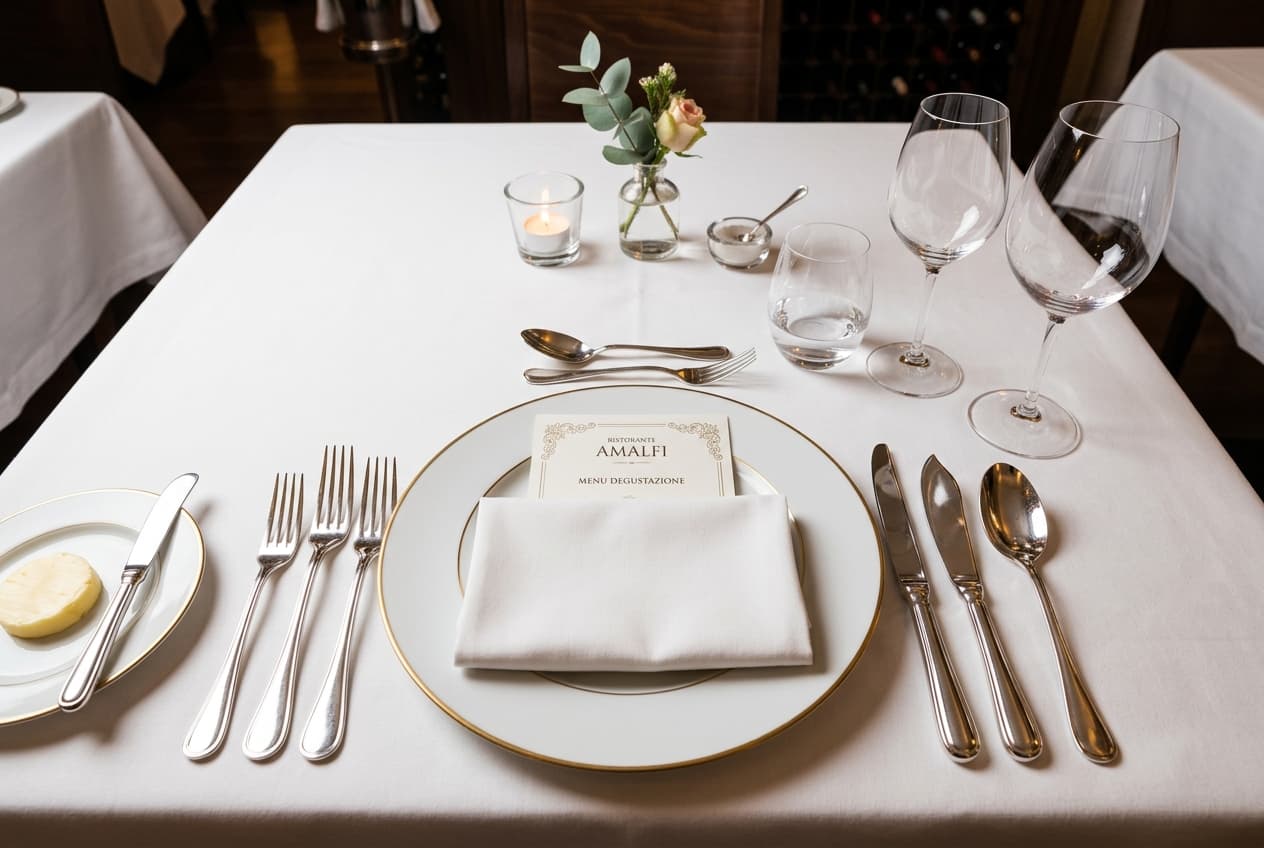
3 forks on the left, 3 knives/spoon on the right, dessert flatware above, and crystal water/wine trio.
The Knives (I Coltelli) & Their Practical Roles
Tap audio to hear Italian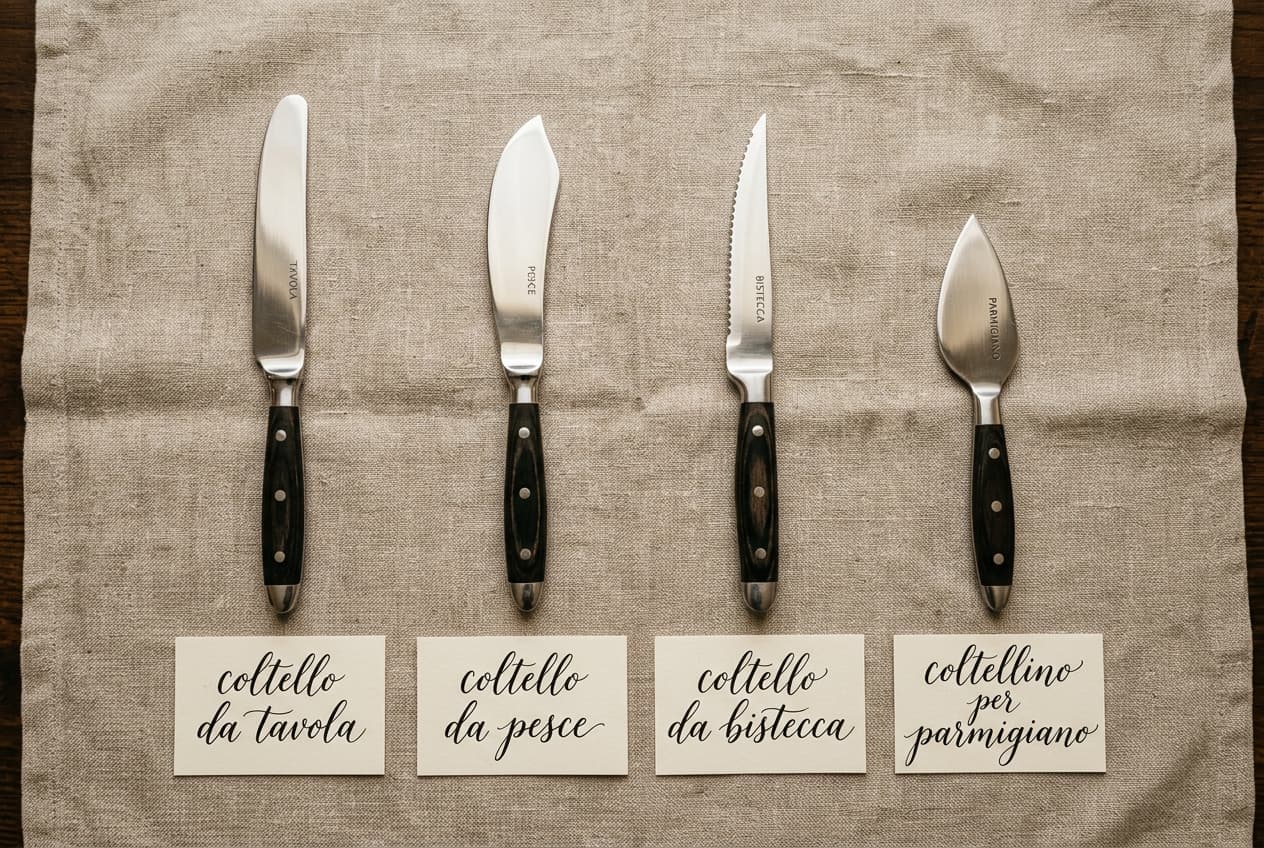
Il Coltello da Tavola
Placement & Etiquette: Placed immediately to the right of the plate with the cutting blade facing inward toward the plate. Used for cutting tender meats, cooked vegetables, and appetizers. Never used to cut pasta.
Il Coltello da Pesce
Why it has no teeth: Features a wide, dull spatula/paddle blade. Fish is delicate and flaky; a serrated knife shreds the meat and slices bones into hazards. The spatula acts like a lever to slide fillets off the spine and lift the skin cleanly.
Il Coltello da Bistecca
Brought on Demand: A sharp, pointed blade with micro-serrations. In luxury restaurants, waitstaff clear your regular table knife and bring this when you order Bistecca alla Fiorentina or Tagliata so you slice the meat effortlessly without pressing out the juices.
Coltellino per Parmigiano
The Almond Shape (A Mandorla): A short, teardrop-shaped blade. You never slice aged Parmigiano-Reggiano flat; you pierce the tip into the cheese and twist gently to break off bite-sized natural crystalline chunks along its natural fissures.
Forks & Spoons (Le Forchette e i Cucchiai)
Tap audio to hear Italian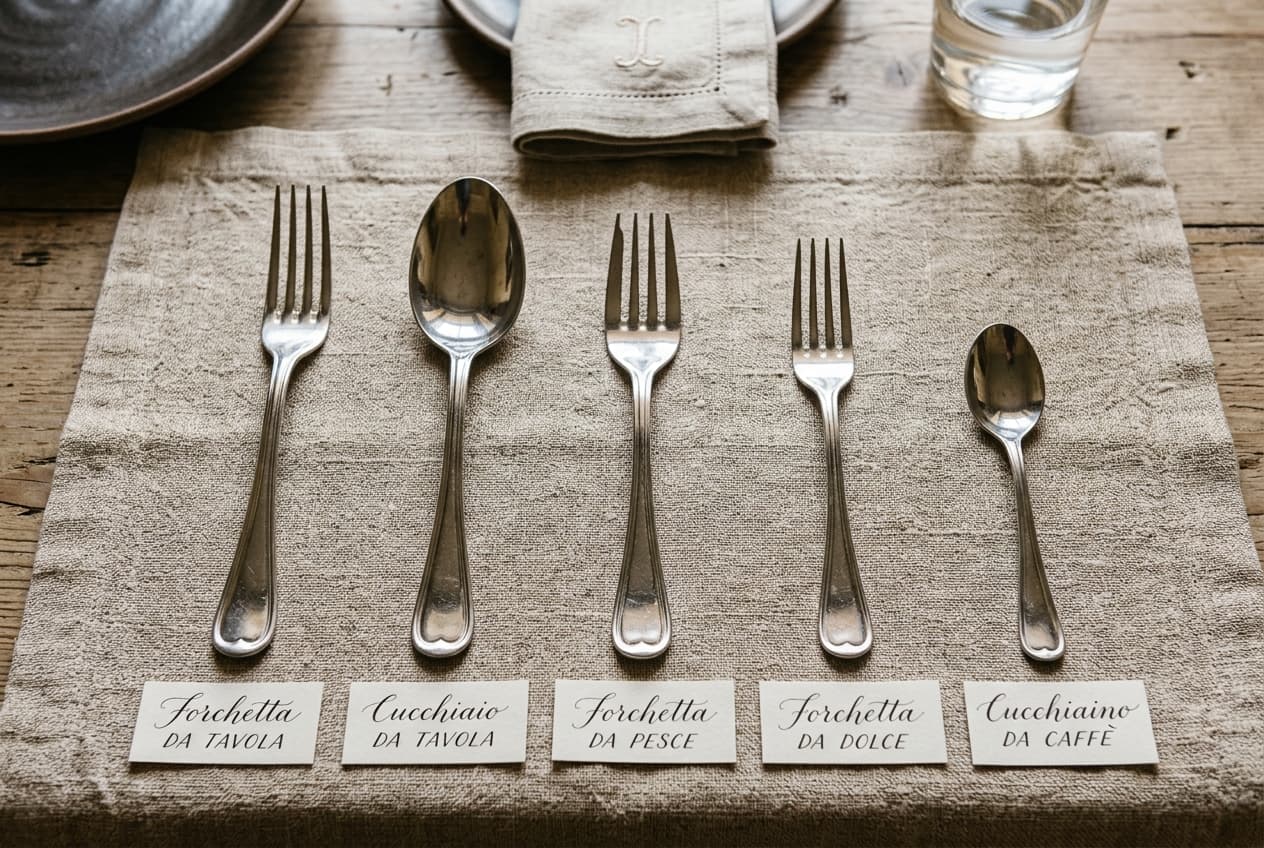
La Forchetta da Tavola
The standard 4-tine fork on the left. Used for primi (twirled against plate edge for long pasta) and meat secondi.
La Forchetta da Pesce
Flatter with 3-4 wider tines. Holds fish steady while the fish knife spatula lifts fillets cleanly from the bone.
La Forchetta da Dolce
Smaller 3-tine fork placed horizontally above the plate, handle pointing left and tines pointing right. For cakes and tarts.
Il Cucchiaio da Tavola
Placed far right. For broths, minestre, and puréed soups. Never used to twirl spaghetti.
Il Cucchiaino da Caffè
Tiny spoon on the saucer. Used only to stir crema and sugar. Never left resting inside the cup while drinking.
Il Cucchiaino da Dessert
Placed horizontally above the plate pointing left. For puddings, panna cotta, tiramisù, and gelato.
The Silent Language of the Plate (Il Linguaggio del Piatto)
Place fork and knife in an inverted V shape (forming an 8:20 angle on a clock face) with the knife blade facing inward. The server will not interrupt your conversation or take your plate.
Place fork and knife parallel together across the plate pointing toward 10:00 or 12:00, tines facing up and knife blade facing inward. The server can spot this from across the room and will come clear the table.
Quick Shift Check
Why does the specialized Italian fish knife (il coltello da pesce) have a blunt, unsharpened spatula blade with no teeth?