Module 1 of 6
Decoding the Italian menu & course flow
The five courses, spotting authentic trattorias vs. tourist traps, and split-order strategies.
Decoding the Italian menu & course flow
The anatomy of an Italian menu
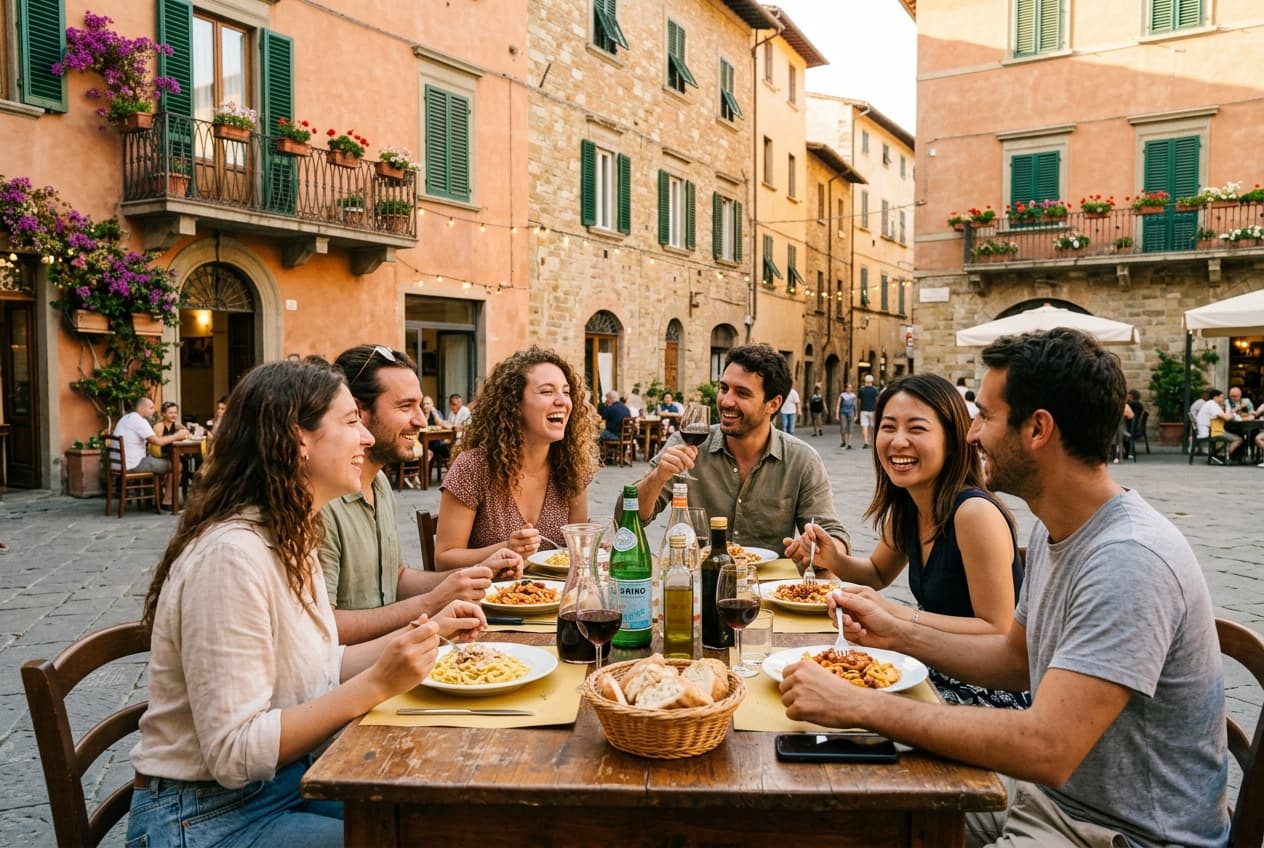
Opening an authentic Italian menu can feel overwhelming: you will see Antipasti (starters), Primi Piatti (first courses: pasta, risotto, soup, gnocchi), Secondi Piatti (second courses: meat, fish, poultry), Contorni (vegetable side dishes), and Dolci (desserts). The most liberating secret of dining in Italy is that you are never expected to order all five courses. Italians themselves rarely eat an antipasto, primo, and secondo in a single ordinary meal. A standard casual dinner is typically either an antipasto to share followed by a primo each, or a primo followed by a light dessert, or an antipasto followed by a secondo with a contorno. Only on festive Sunday family lunches or formal celebrations do Italians eat through the full spectrum. Feel free to order just what matches your appetite.
“Possiamo ordinare solo un primo e un antipasto da condividere?”
Can we just order a first course each and an appetizer to share?
“Il primo è abbastanza abbondante?”
Is the pasta dish hearty/filling?
“Vorremmo prendere questi piatti al posto del secondo.”
We would like these dishes instead of a main course.
How to spot an authentic Italian trattoria
Italy is celebrated for world-class food, but historic city centers are crowded with tourist traps designed to extract money for mediocre meals. Four rules help you find authentic gems: First, avoid places with glossy laminated food photos outside; authentic trattorias write menus on chalkboards or paper. Second, avoid aggressive street barkers (buttadentro); quality kitchens rely on reputation and regulars. Third, look for the asterisk (*): Italian law requires menus to mark frozen ingredients (prodotto surgelato); authentic places have at most one or two asterisks for seasonal seafood or mushrooms, while tourist traps mark the whole page. Fourth, look for the daily specials (i piatti del giorno) based on what the chef found fresh at the morning market.
“Avete dei piatti del giorno fuori menu?”
Do you have daily specials off the menu?
“Cosa ci consiglia di tipico della casa?”
What house specialty do you recommend?
“Tutto è fatto in casa?”
Is everything homemade?
The split-order strategy
What happens if you want pasta (primo) but your partner wants grilled steak (secondo)? In Italian kitchens, primi and secondi are prepared on separate stations and served sequentially. If you don't communicate with your server, the kitchen might serve your partner's steak twenty minutes after your pasta, leaving one of you sitting awkwardly with an empty plate. Always tell the server upfront: 'Possiamo averli insieme?' (Can we have them together?). Alternatively, ask for two small sharing plates (due piattini) to split a rich pasta first, and then share a grilled meat or fish course afterward. Splitting courses allows you to taste more of the menu without overeating.
“Possiamo avere il primo e il secondo insieme allo stesso momento?”
Can we have the first course and the second course served together?
“Ci può portare due piattini per dividere la pasta?”
Could you bring us two small plates to share the pasta?
“Facciamo mezza porzione?”
Can we do a half portion?
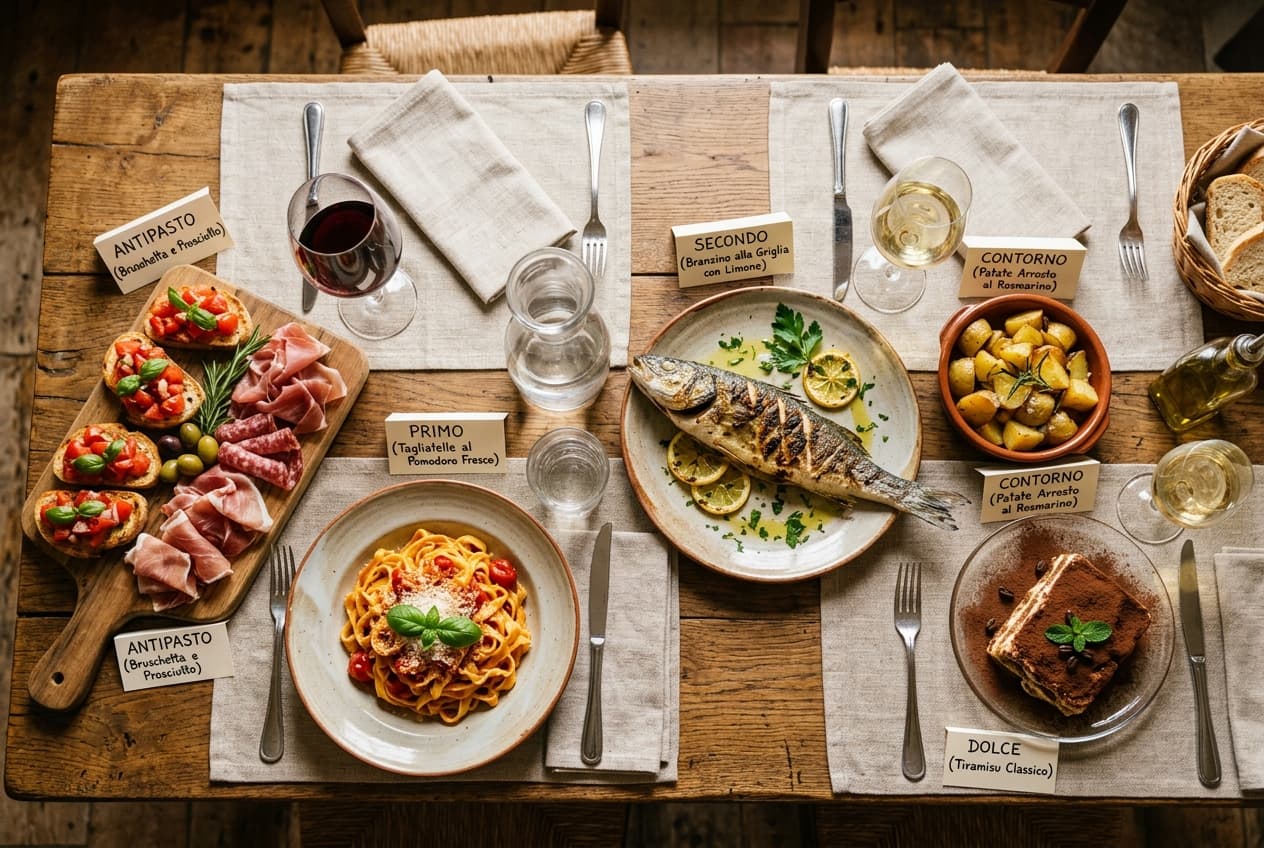
The Authentic Italian Meal Progression
Learn the 5 traditional courses, sample authentic dishes, and hear how native Italians pronounce each course name.
From antipasto to dolce: an intentional culinary arc designed to be savored sequentially.
L'Antipasto
The Starter: Light bites to awaken the palate. Examples: Bruschetta al Pomodoro e Basilico, Prosciutto di Parma e Burrata. Often shared among guests.
Il Primo Piatto
The Grain Course: Pasta, risotto, polenta, or gnocchi. Sized at 80–100g. Examples: Tagliatelle al Ragù, Spaghetti alle Vongole. Never served with chicken.
Il Secondo Piatto
The Protein Centerpiece: Meat or fish. Examples: Branzino alla Griglia con Limone, Bistecca alla Fiorentina. Served plain with no side vegetables on the plate.
Il Contorno
The Side Dish: Ordered separately to accompany the secondo. Examples: Patate Arrosto al Rosmarino, Insalata Mista. Raw salad is eaten here to cut richness.
Il Dolce
The Sweet Finish: Concludes the meal before espresso. Examples: Tiramisù Classico, Panna Cotta, Cannoli Siciliani.
Caffè & Digestivo
The Final Ritual: A single hot espresso (never cappuccino) followed by an herbal amaro (Montenegro, Averna) or limoncello to stimulate digestion.
Quick Shift Check
Are you expected to order all five courses (antipasto, primo, secondo, contorno, dolce) in an Italian restaurant?