Bar & Restaurant Service
Free course ~60 min · 6 modulesLinkedIn-ready certificate

Bar & Restaurant Service

The service sequence, standards, and rush survival — free to learn.

Six short modules on what bars and restaurants expect from day one, from the first greeting to a table with a problem. Study free, then take the exam when you feel ready.

Who it's for
First-season and early-career waiters, runners, bar staff, and anyone applying to restaurants, beach clubs, bars, and resorts.

At a glance

Course
Free, online, self-paced
Certificate
€7.99, paid only after you pass
Exam
20 questions, 75% to pass, free retakes
Verification
Unique certificate ID, publicly checkable at hospitalitycertificate.com/verify
Study time
About 60 minutes, 6 modules
Issued by
Hospitality Certificate (CertHub network)

Module 5 of 6

Bar service

What the modifiers mean, how to pour wine and beer properly, and when to stop serving.

What guests mean when they order
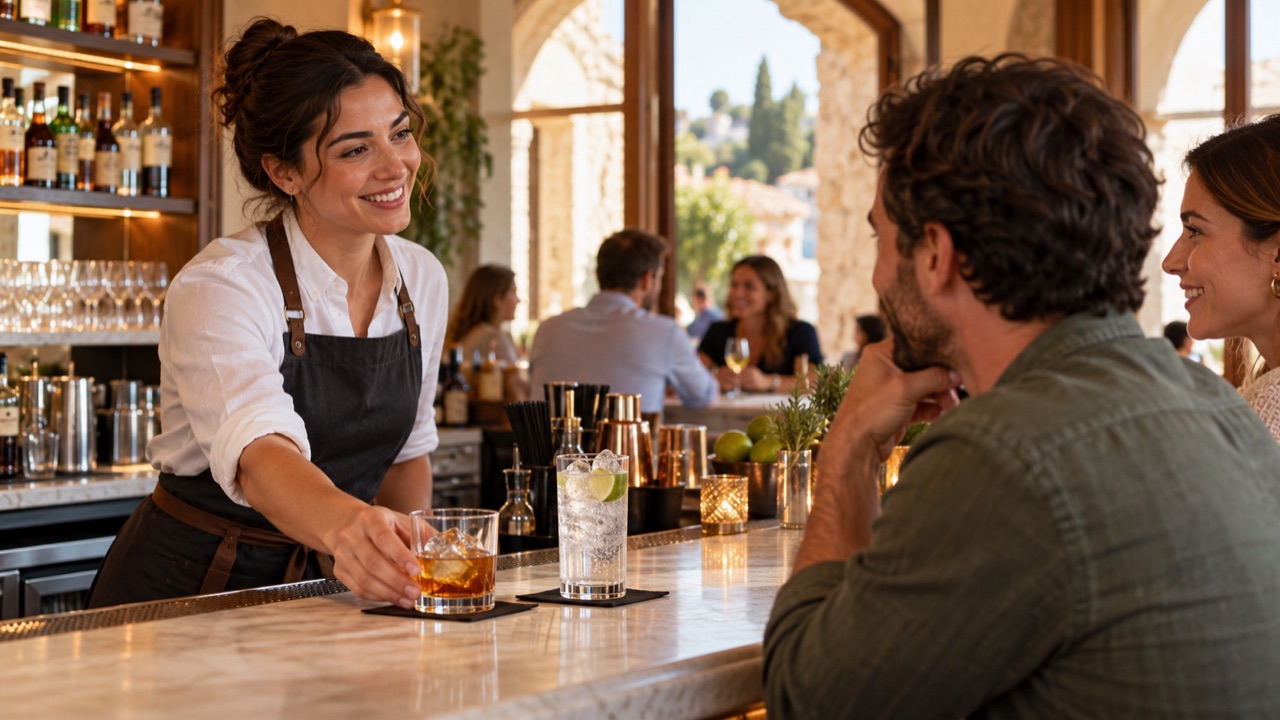
Guests describe what they want with shorthand, and getting it wrong in front of a full bar is embarrassing.

Tap to continue

'Neat' means the spirit at room temperature, no ice, nothing added. 'On the rocks' means over ice. 'Straight up' means chilled — shaken or stirred — then strained into a stem glass with no ice. 'With a splash' means a small dash of mixer.

The glass matters too: highball for long drinks, rocks glass for spirits over ice, coupe or martini glass for straight-up cocktails.

1/4
A bartender serves a spirit over ice in a short rocks glass beside an iced long drink in a highball glass.
Phrases to keepClick audio icon to listen

“With ice, or neat?”

When the order is ambiguous — ask once, cleanly

“Would you like lime with that?”

Offer the garnish, don't assume

Wine and beer at the table

Wine: show the label to whoever ordered before you open it, pour a small taste for them to approve, then fill glasses to about a third — enough room to swirl, not so little it looks mean.

Tap to continue

Sparkling wine such as Prosecco or Champagne is served well chilled, around 6–8°C: straight from the fridge, then kept in an ice bucket at the table. Served warm, it goes flat and tastes sharp.

Hold the bottle with a napkin if it's cold and wet; pour without dripping by giving a slight twist at the end of each pour.

1/5
Wine glass varieties
Wikimedia Commons / New Martinsville Glass / Public domain
Phrases to keepClick audio icon to listen

“Would you like to taste the wine before I pour for the table?”

Always for a bottle — it's their money

“Still or sparkling water for the table?”

Early, before you pour the wine

Stopping service
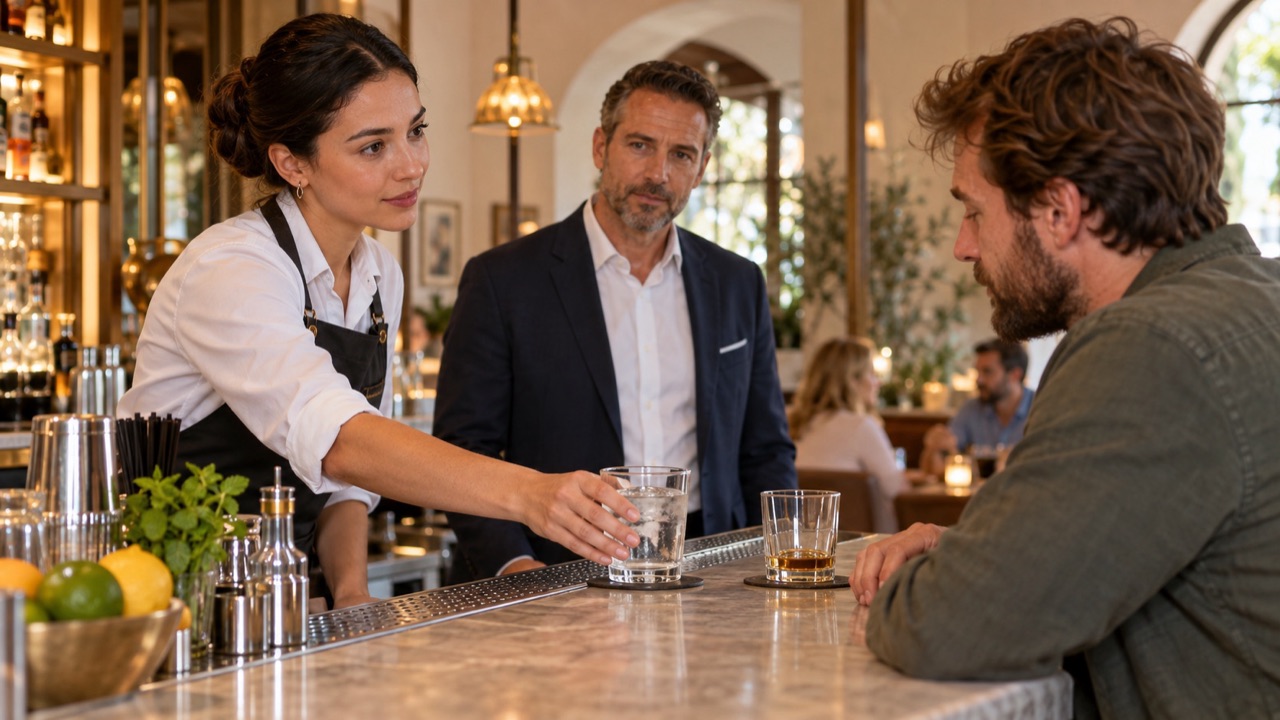
In most countries the person who serves alcohol shares responsibility for serving it legally. The legal age and the rules differ by country, and sometimes by drink, so learn your venue's policy on your first day.

Tap to continue

Many venues ask for ID from anyone who looks younger than a set age, for example 25 under the UK's 'Challenge 25' scheme. No valid ID, no drink: say it politely and without debate. Most guests understand.

Signs a guest has had enough: slurred speech, unsteady on their feet, getting louder or more aggressive, ordering faster than they were earlier.

1/5
Bartender calmly pauses further alcohol service and offers water to an adult guest, with a manager nearby, no humiliating confrontation.
Phrases to keepClick audio icon to listen

“Could I get you a glass of water first?”

Slowing things down without a refusal yet

“I'm going to have to stop there for tonight — can I get you something soft?”

The refusal: calm, direct, no explanation needed

Practice: the guest who has had enough

An example of refusing service calmly. The details of the law differ by country, so follow your venue's policy and involve your manager.

Tap to continue

Guest (loudly, slurring): Another two beers over here! Bartender (stepping closer, quiet voice): I'm going to stop the alcohol for you for tonight. Can I get you some water, or a soft drink on the house? Guest: What? I'm fine! I've only had a few. Bartender: I hear you. It's my call for tonight, and I'd rather you got home safely. Water or a cola?

Why it works: the bartender does not argue about how drunk the guest is, does not lecture, and does not do it in front of the whole bar. The decision is stated once, calmly, as the venue's, with something positive offered.

1/5
Phrases to keepClick audio icon to listen

“I'm going to stop the alcohol for you for tonight. Can I get you some water?”

Refusing service privately, with an alternative

Quick Shift Check

What does ordering a spirit 'neat' mean in bar terminology?

Already know this material?

You can take the 20-question exam any time — no need to finish every module first.

Take the exam
Bar & Restaurant Service
Free Course & Verified Exam
Take Exam