Bartender Salary in Italy: CCNL Pay, Tips, and Hours
What bartenders and baristas earn in Italy: CCNL Turismo pay scales, night shift premiums, Italian tip culture, and seasonal resort compensation packages.
Key Takeaways at a Glance
CCNL Barman Base
€1,590 - €1,695 / mo (Liv. 5-4)
Night Shift Premium
+25% to +30% Hourly Allowance
Annual Pay Rhythm
14 Mensilità + TFR Severance
Seasonal Resort Tips
€200 - €500 / mo in peak months
- 1.How bartending compensation is structured in Italy
- 2.CCNL pay levels: Barista to Head Bartender
- 3.Night shift allowances and cash handling bonuses
- 4.Italian tip culture: modest bonuses, not survival wages
- 5.Milan and Rome cocktail bars vs coastal resort beach clubs
- 6.Seasonal resort bartending: free accommodation and saving potential
- 7.Overtime regulations and contract types in Italian bars
- 8.How to qualify for high-end bartending roles in Italy
How bartending compensation is structured in Italy
In Italy, the bar profession encompasses two distinct operational roles: the traditional daytime coffee and snack specialist (barista) and the evening cocktail and spirits artisan (barman or bartender). Compensation is governed by two main national collective agreements: the CCNL Pubblici Esercizi (FIPE/Confcommercio) for independent cocktail bars and cafés, and the CCNL Turismo (Alberghi) for hotel lounge and resort bars.
Both agreements establish strict contractual wage floors across 14 monthly disbursements, mandatory weekly rest days (riposo settimanale), night shift premiums, and statutory severance pay (TFR).
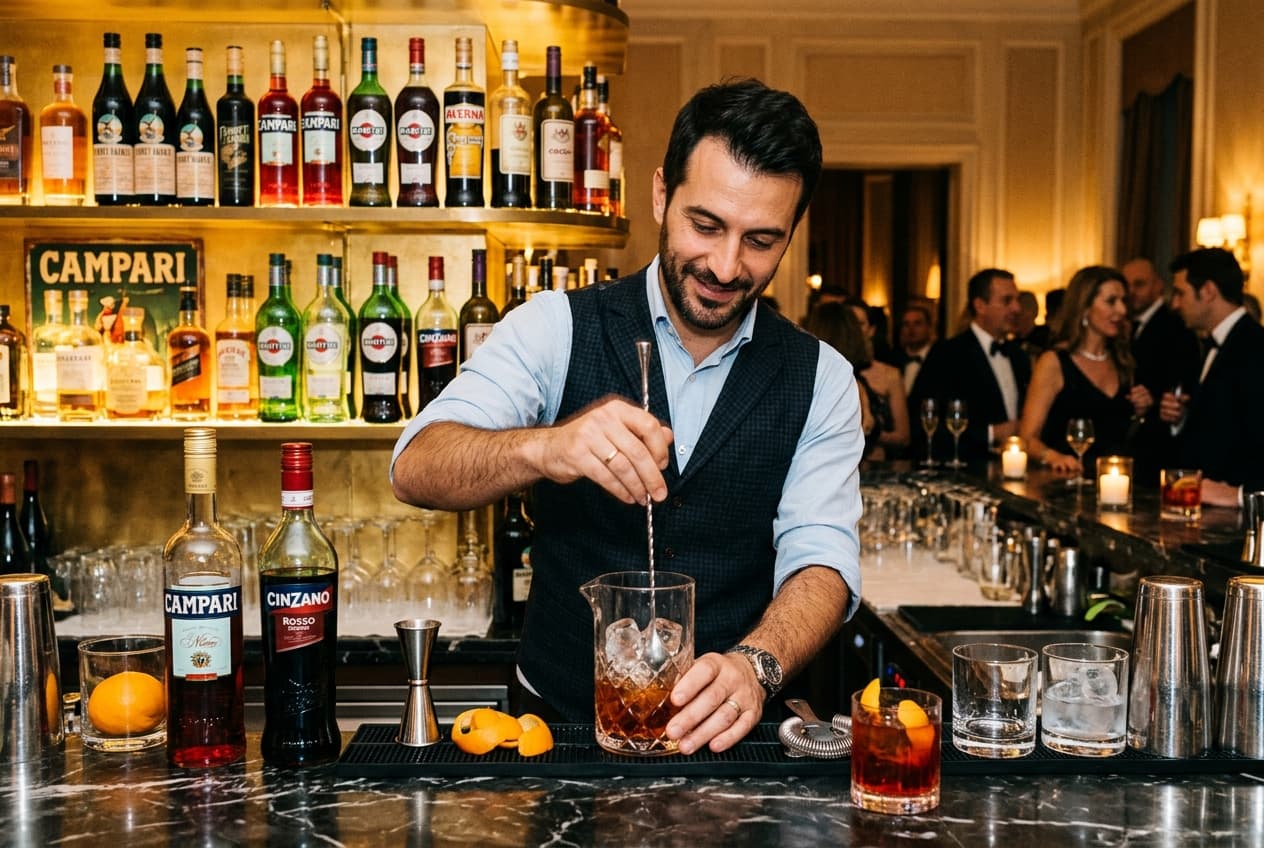
CCNL pay levels: Barista to Head Bartender
Under the active collective bargaining frameworks, bartending roles are classified by technical skill, drink recipe knowledge, and shift supervision responsibility:
| CCNL Livello | Bar Role & Title | Gross Base (14 checks) | Estimated Net Monthly | Core Technical Duties |
|---|---|---|---|---|
| Livello 6 | Aiuto Barista / Barback | €1,507.45 / mo | €1,180 - €1,240 / mo | Glassware cleaning, ice prep, garnish slicing, stock rotation |
| Livello 5 | Barista / Banco Bar | €1,590.27 / mo | €1,250 - €1,320 / mo | Espresso preparation, classic aperitivi (Spritz, Americano), till management |
| Livello 4 | Barman / Cocktail Bartender | €1,695.69 / mo | €1,350 - €1,450 / mo | Craft mixology, signature cocktail recipes, spirit inventory control |
| Livello 3 | Capo Barman / Head Bartender | €1,795.50 / mo | €1,440 - €1,540 / mo | Cocktail menu design, beverage cost control, team shift scheduling |
Scroll horizontally for full table →
Night shift allowances and cash handling bonuses
Because cocktail bars and hotel lounges operate into the late night and early morning hours, Italian labor agreements mandate specific supplementary allowances that meaningfully increase take-home pay:
Night Work Premium (Lavoro Notturno): Hours worked between 22:00 (10:00 PM) and 06:00 (6:00 AM) carry a mandatory 25% to 30% hourly wage surcharge. A bartender working late evening cocktail shifts routinely earns an additional €150 to €250 net per month in night allowances.
Cash Handling Allowance (Indennità di Cassa): Bartenders who operate the cash register and are held personally liable for cash register discrepancies receive a contractually mandated cash indemnity, typically 5% to 8% of the monthly base wage.
Italian tip culture: modest bonuses, not survival wages
Unlike in the United States where bartenders rely on 20% tips to earn a living wage, Italian bartenders receive a full living wage directly from their employer. Tipping (la mancia) in Italy is a gesture of appreciation, not an obligation.
In everyday Italian cafés and neighborhood wine bars, patrons typically leave small change (€0.20 to €1.00). However, at high-end hotel cocktail bars, rooftop lounges in Rome and Milan, and luxury beach clubs in Costa Smeralda, international travelers tip generously. In premium settings, pooled gratuities add €200 to €500 net per month during peak season.
Tip Expectations in Italy
Never count on tips to cover basic living expenses in Italy. Treat all tips as supplementary savings on top of your legally guaranteed CCNL base salary.
Milan and Rome cocktail bars vs coastal resort beach clubs
The Italian bartending landscape offers two distinct career paths:
City Cocktail Scene: In Milan (the spiritual home of the Aperitivo and the Negroni) and Rome, craft cocktail bars offer year-round permanent contracts (tempo indeterminato). While living costs are higher, working in leading cocktail bars provides international networking, mixology competition exposure, and steady annual earnings.
Resort Beach Clubs & Hotel Lounges: In seasonal destinations like Capri, Taormina, Lake Como, and Porto Cervo, bartenders work intensive 5 to 7-month seasons with staff housing provided. Overtime hours and high-season tourist tips allow disciplined bartenders to save substantial sums before returning to city roles for the winter.
Seasonal resort bartending: free accommodation and saving potential
Resort contracts that include staff accommodation (alloggio) and duty meals (vitto) represent the fastest way for young bartenders to build savings. With room rent and grocery expenses eliminated, virtually the entirety of your monthly paycheck remains untouched.
At the end of a six-month season, an experienced Livello 4 bartender who manages their spending can easily save €7,000 to €9,000 in cash, alongside accumulated TFR severance pay and subsequent eligibility for Italian winter unemployment benefits (NASpI).
Overtime regulations and contract types in Italian bars
Under Italian employment law, full-time contracts are based on 40 hours per week. Overtime (lavoro straordinario) must be recorded and compensated with statutory premiums: +15% for daytime overtime, +30% for night overtime, and +50% for overtime worked on scheduled rest days.
Ensure your employer provides a formal employment declaration (modello Unilav) registered with the Ministry of Labor prior to your first working shift, guaranteeing full social security and healthcare coverage.
How to qualify for high-end bartending roles in Italy
To stand out for prestigious bar and hotel lounge positions in Italy, hiring managers look for classical cocktail recipe mastery, standard sequence of service proficiency, and confident conversational English.
If you're preparing to work in Italy, a verified certificate can make your application stand out. The Bar & Restaurant Service course on Hospitality Certificate is free to study and takes about 2 hours — and a passing exam score earns you a verifiable digital certificate employers can check at /courses/bar-restaurant-service.
Bar & Restaurant Service
The service sequence, standards, and rush survival — free to learn. Access all study modules free, then take the exam to earn your certificate.