
The cocktail notebook · Brandy & grape spirit
Sazerac
cognac reference
Cognac-led, lightly sweetened, anise aroma and Peychaud’s spice. A aromatic spirit-forward cocktail made by stir and strain.
- Base
- cognac
- Method
- Stir & Strain
- Glass
- Chilled rocks glass
- Yield
- One drink
Recipe reference: IBA reference recipe. House adds 5 ml water to dissolve the cube and fixes cube mass. IBA lists cognac and a 10 ml absinthe rinse.
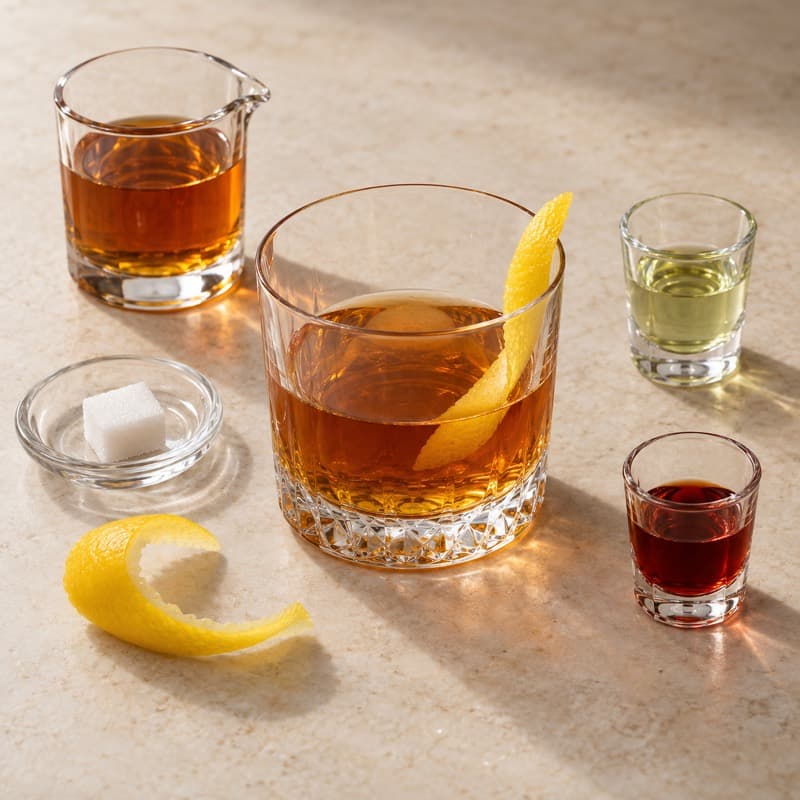
Sazerac recipe
1 serving · IBA reference recipeMillilitres control this recipe. US fluid ounces are rounded to the nearest quarter ounce for convenience and are not a different recipe ratio. Dashes, spoons, leaves and other non-liquid measures are listed as written.
| Measure | Ingredient |
|---|---|
| 50 ml≈ 1.75 US fl oz | cognac |
| 10 ml for rinse; excess discarded | absinthe |
| 1 cube, target 4 g | white sugar |
| 2 dashes | Peychaud’s bitters |
| 5 ml≈ 0.25 US fl oz | water to dissolve sugar, house addition |
Ice: Ice for chilling and stirring only; no serving ice. Garnish: Lemon zest.
Learning bar service? Continue with the Sazerac in module 4 of the free course →
How to make it
- Coat the chilled rocks glass with absinthe; add chilling ice and set aside.
- Dissolve sugar with bitters and 5 ml water in a mixing glass, then add cognac.
- Add stirring ice and stir until chilled.
- Discard the serving glass’s ice and excess absinthe; strain in the drink and express lemon zest.
Why it works: The rinse provides aroma without overwhelming the spirit. Dissolving the cube first avoids sugar residue.
Common mistakes, useful fixes
Anise dominates
discard excess rinse.
Gritty
dissolve sugar before stirring with ice.
Automatic ice cube
this reference is served without ice.
Serving the guest
What to tell the guest
This reference uses cognac; would you prefer the bar’s rye version?
Dietary and product checks
Check absinthe and bitters; the rinse still contributes some alcohol. Do not count all 10 ml as retained liquid.
Variations
- A rye Sazerac changes the base and needs a named specification.
- Split cognac-and-rye versions are house adaptations, not this reference.
Where does the Sazerac come from?
Origin: New Orleans, United States; 19th-century development. (Established city association; detailed origin chronology disputed)
The Sazerac is closely associated with New Orleans and with the Sazerac and Peychaud names. The company’s timeline describes a transition from cognac to rye as French brandy supply became difficult. Avoid compressing that development into a claim that one early pharmacy invented every feature of today’s drink. The IBA reference taught here uses cognac; many modern bars serve a rye version. Both ingredient identity and presentation therefore need explanation. The absinthe is a rinse, with excess discarded, not a full ten-millilitre addition to the finished drink.
Sazerac questions
Is all 10 ml absinthe served?
No. It coats the glass and excess is discarded.
Is ice left in the serving glass?
No in this reference.
From a recipe to a repeatable skill
Learn the method behind the order.
Sazerac is a required study in Advanced Cocktails & Refined Bar Service, module 4: Aromatics, intense modifiers and split bases. Distinguish a discarded aromatic rinse from a retained ingredient and account for waste.
The course is free. An optional paid certificate tests knowledge in an online exam; it is not an observed practical assessment or an accredited bartending qualification.