The cocktail notebook · Gin
Hanky Panky
Gin and vermouth with a bitter herbal finish. A advanced comparison study made by stir and strain.
- Base
- London dry gin
- Method
- Stir & Strain
- Glass
- Cocktail coupe
- Yield
- One drink
Recipe reference: IBA reference recipe. Reference uses 7.5 ml fernet; do not replace it silently with historical dash-based versions.
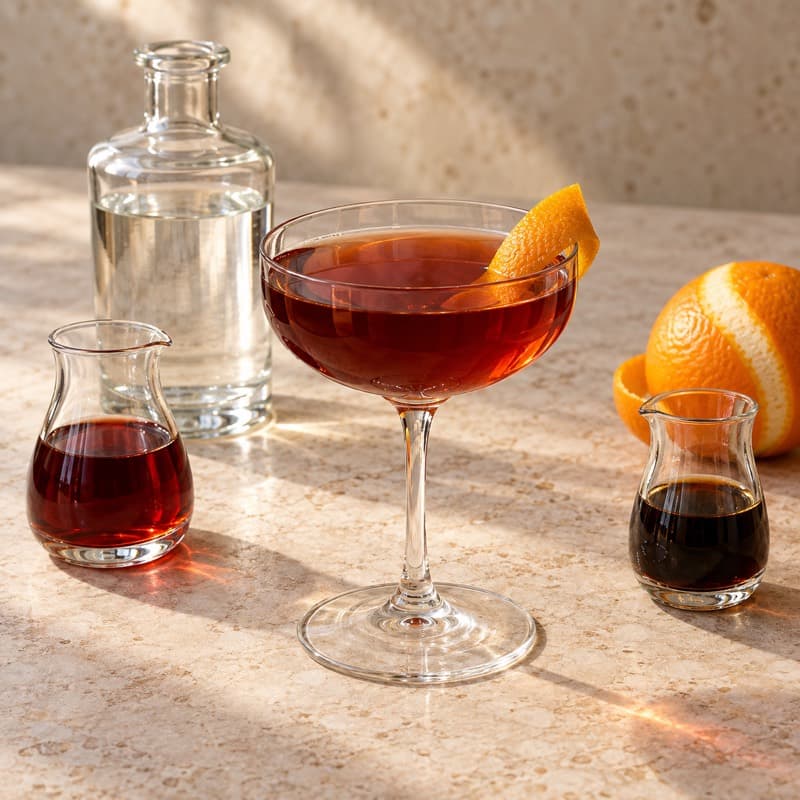
Hanky Panky recipe
1 serving · IBA reference recipeMillilitres control this recipe. US fluid ounces are rounded to the nearest quarter ounce for convenience and are not a different recipe ratio. Dashes, spoons, leaves and other non-liquid measures are listed as written.
| Measure | Ingredient |
|---|---|
| 45 ml≈ 1.5 US fl oz | London dry gin |
| 45 ml≈ 1.5 US fl oz | sweet red vermouth |
| 7.5 ml≈ 0.25 US fl oz | fernet |
Ice: Preparation ice only; no serving ice. Garnish: 1 orange zest.
Learning bar service? Continue with the Hanky Panky in module 4 of the free course →
How to make it
- Chill the serving glass and prepare clean mixing equipment.
- Measure all recipe ingredients into a mixing glass with fresh ice.
- Stir smoothly to combine, chill and control dilution; check the venue’s observed target.
- Strain into the chilled serving glass and apply the specified garnish.
Why it works: The measured fernet modifier is much more than an uncalibrated dash. Compare vermouth freshness with the same gin and fernet before changing ratios.
Common mistakes, useful fixes
Unrecorded substitution
Describe the fernet character and recommend another stirred option.
Inconsistent finish
check the exact measures, products and preparation sequence.
Unclear guest expectation
explain this specification before preparing.
Serving the guest
What to tell the guest
Gin and vermouth with a bitter herbal finish. Describe the fernet character and recommend another stirred option.
Dietary and product checks
Check all exact product labels and relevant guest restrictions; no generic recipe guarantees safety.
Variations
- Any variant must be named and recorded. Describe the fernet character and recommend another stirred option.
Where does the Hanky Panky come from?
Origin: London, United Kingdom; The Savoy attributes the drink to Ada Coleman. (Attributed venue/creator account or documented cultural context; limits stated)
The Savoy credits its former head bartender Ada Coleman with creating this drink for actor Charles Hawtrey. Its account connects the name to his enthusiastic response and notes publication in the 1930 Savoy Cocktail Book. This is an attributed venue account, not independent proof of every detail. The account describes a few dashes of fernet; our selected modern IBA recipe specifies 7.5 ml, so the historical anecdote does not replace the measured lesson recipe.
Hanky Panky questions
What is the key decision in this study?
The measured fernet modifier is much more than an uncalibrated dash. Compare vermouth freshness with the same gin and fernet before changing ratios.
The guest dislikes medicinal bitterness.
Describe the fernet character and recommend another stirred option.
From a recipe to a repeatable skill
Learn the method behind the order.
Hanky Panky is a required study in Advanced Cocktails & Refined Bar Service, module 4: Aromatics, intense modifiers and split bases. Dose an intense bitter modifier precisely rather than escalating sweetness.
The course is free. An optional paid certificate tests knowledge in an online exam; it is not an observed practical assessment or an accredited bartending qualification.