
The cocktail notebook · Gin
Ramos Fizz
Creamy citrus, floral aroma and a light foam. A advanced comparison study made by shake and strain.
- Base
- gin
- Method
- Shake & Strain
- Glass
- Highball
- Yield
- One drink
Recipe reference: IBA reference recipe. IBA gives a two-minute ice shake, double strain and one-minute ice-free shake. House retains this as a reference trial, uses pasteurised egg, 1:1 syrup and 30 ml soda. Validate equipment, texture and safe handling.
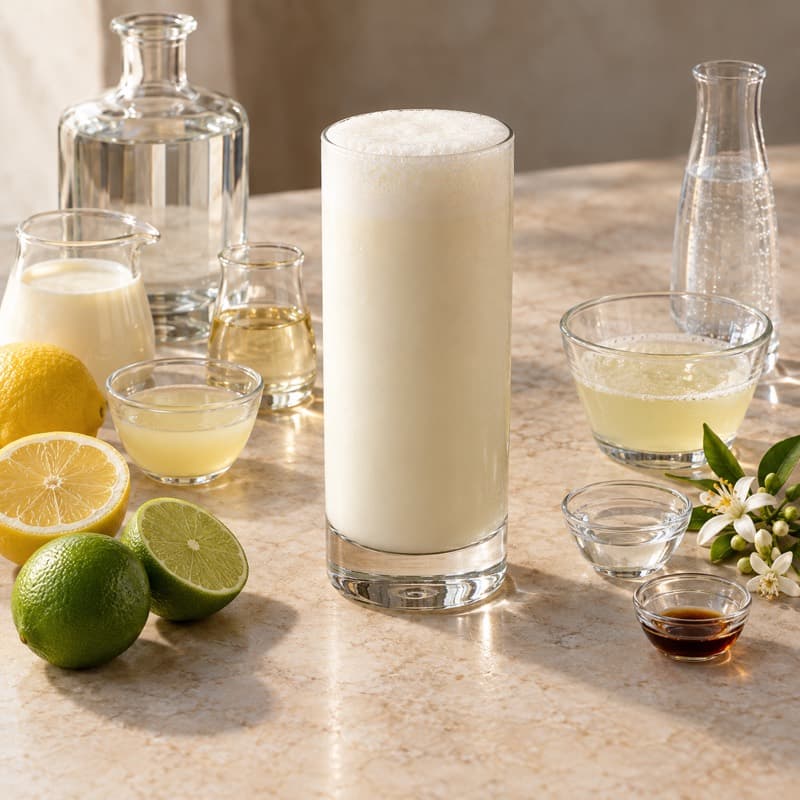
Ramos Fizz recipe
1 serving · IBA reference recipeMillilitres control this recipe. US fluid ounces are rounded to the nearest quarter ounce for convenience and are not a different recipe ratio. Dashes, spoons, leaves and other non-liquid measures are listed as written.
| Measure | Ingredient |
|---|---|
| 45 ml≈ 1.5 US fl oz | gin |
| 15 ml≈ 0.5 US fl oz | fresh lime juice |
| 15 ml≈ 0.5 US fl oz | fresh lemon juice |
| 30 ml≈ 1 US fl oz | simple syrup, 1:1 by mass |
| 60 ml≈ 2 US fl oz | fresh dairy cream |
| 30 ml≈ 1 US fl oz | approved pasteurised liquid egg white |
| 3 dashes | food-grade orange flower water |
| 2 drops | food-grade vanilla extract |
| 30 ml≈ 1 US fl oz | chilled soda water, house top-up |
Ice: Preparation ice only; no serving ice. Garnish: None.
Learning bar service? Continue with the Ramos Fizz in module 5 of the free course →
How to make it
- Use clean equipment and approved pasteurised egg and chilled cream; omit soda from the shaker.
- Shake the still ingredients with ice. The IBA reference trial specifies two minutes; validate the procedure with the actual equipment.
- Double strain into a clean vessel, return the liquid to the shaker and shake without ice; reference trial one minute.
- Strain into the highball and add 30 ml cold soda gently. Check foam, texture and serving temperature before service.
Why it works: This is an emulsion and foam exercise. Citrus, dairy and egg must integrate before carbonated soda is added. Use a venue-approved trial rather than treating a fixed shake time as universal.
Common mistakes, useful fixes
Unrecorded substitution
Explain preparation time, confirm capacity and offer an alternative if consistent preparation is not feasible.
Inconsistent finish
check the exact measures, products and preparation sequence.
Unclear guest expectation
explain this specification before preparing.
Serving the guest
What to tell the guest
Creamy citrus, floral aroma and a light foam. Explain preparation time, confirm capacity and offer an alternative if consistent preparation is not feasible.
Dietary and product checks
Contains egg; use approved pasteurised product and allergen controls. Contains dairy; follow cold storage and cross-contact procedures. Check all exact product labels and relevant guest restrictions; no generic recipe guarantees safety.
Variations
- Any variant must be named and recorded. Explain preparation time, confirm capacity and offer an alternative if consistent preparation is not feasible.
Where does the Ramos Fizz come from?
Origin: New Orleans, United States; IBA attributes it to Henry Ramos in 1888. (Attributed reference account)
The IBA attributes this drink to Henry Ramos in New Orleans in 1888 and recounts a long-shaking tradition. Treat that as an attributed account rather than a required modern service duration. Our lesson uses the published method as a trial, with actual texture and temperature checked before service.
Ramos Fizz questions
What is the key decision in this study?
This is an emulsion and foam exercise. Citrus, dairy and egg must integrate before carbonated soda is added. Use a venue-approved trial rather than treating a fixed shake time as universal.
The guest requests a fast batch of six.
Explain preparation time, confirm capacity and offer an alternative if consistent preparation is not feasible.
From a recipe to a repeatable skill
Learn the method behind the order.
Ramos Fizz is a required study in Advanced Cocktails & Refined Bar Service, module 5: Texture and operational feasibility. Study cream, egg and carbonation sequencing; assess feasibility during service.
The course is free. An optional paid certificate tests knowledge in an online exam; it is not an observed practical assessment or an accredited bartending qualification.