
The cocktail notebook · Brandy & grape spirit
Pisco Sour
Grape spirit, lemon acidity and a smooth foam cap. A foamed sour made by shake and strain.
- Base
- Grape spirit; keep distinct from cognac
- Method
- Shake & Strain
- Glass
- Chilled goblet
- Yield
- One drink
Recipe reference: IBA reference recipe. IBA uses one raw whole egg white and unspecified simple syrup. House replaces it with 30 ml approved pasteurised egg white, chooses 1:1 syrup and fixes garnish at two dashes. Product trial required.
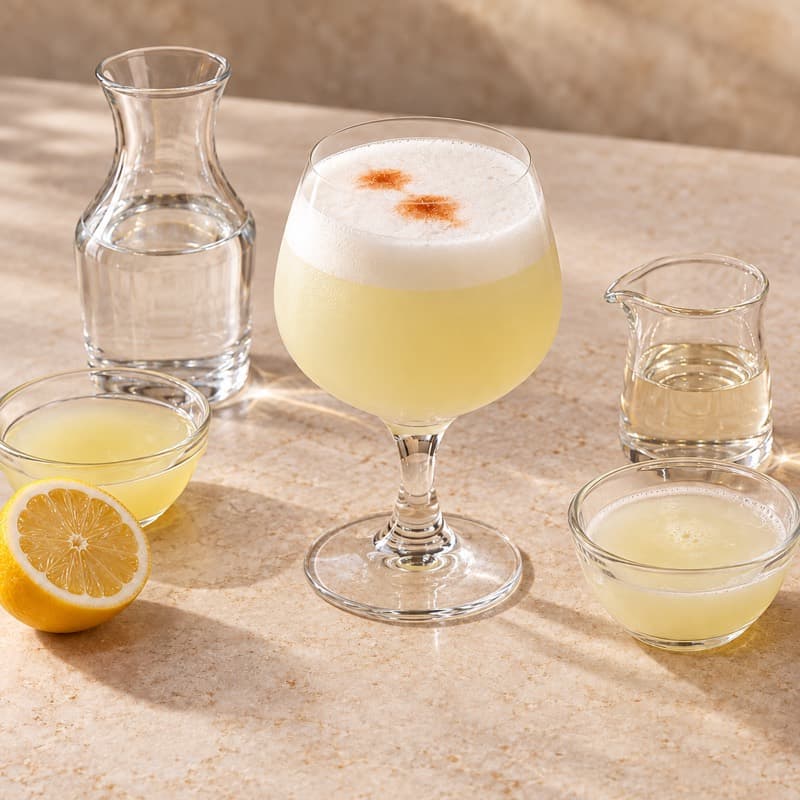
Pisco Sour recipe
1 serving · IBA reference recipeMillilitres control this recipe. US fluid ounces are rounded to the nearest quarter ounce for convenience and are not a different recipe ratio. Dashes, spoons, leaves and other non-liquid measures are listed as written.
| Measure | Ingredient |
|---|---|
| 60 ml≈ 2 US fl oz | pisco |
| 30 ml≈ 1 US fl oz | fresh lemon juice |
| 20 ml≈ 0.75 US fl oz | simple syrup, 1:1 by mass |
| 30 ml≈ 1 US fl oz | approved pasteurised liquid egg white |
| 2 dashes | Amargo bitters, house garnish count |
Ice: Shaking ice only. Garnish: 2 dashes Amargo bitters on foam.
Learning bar service? Continue with the Pisco Sour in module 5 of the free course →
How to make it
- Confirm egg suitability and clean the station under venue procedures.
- Measure pisco, lemon, syrup and approved pasteurised egg white into the shaker.
- Add ice, shake to chill and develop foam, then strain into a chilled goblet.
- Add two controlled bitters dashes to the foam as the aromatic finish.
Why it works: Egg white creates foam; it is not a sweetener. This house uses a measured pasteurised product instead of the raw white named in the reference.
Common mistakes, useful fixes
Weak foam
check product and technique.
Unexpected egg
confirm dietary needs before mixing.
Missing aroma
distinguish bitters garnish from the citrus base.
Serving the guest
What to tell the guest
Grape spirit, lemon acidity and a smooth foam cap. Egg white creates foam; it is not a sweetener. This house uses a measured pasteurised product instead of the raw white named in the reference.
Dietary and product checks
Contains egg; use an approved pasteurised product and venue allergen procedures.
Variations
- Any adaptation needs a recorded recipe and an honest description. Do not serve this formula; offer an approved alternative with clean equipment and disclose its changed texture.
Where does the Pisco Sour come from?
Origin: Peru; its tourism training authority attributes the drink to Morris Bar in Lima. (Official cultural account, with historical attribution)
Peru’s tourism training authority describes a Morris Bar origin and later development of the recipe. It is a cultural account with attribution rather than proof that every modern ingredient appeared at once. Pisco is the recipe’s base; replacing it with another brandy changes the drink.
Pisco Sour questions
Why is egg included?
For texture and foam, with approved handling and dietary checks.
What preparation detail matters for this order?
Egg white creates foam; it is not a sweetener. This house uses a measured pasteurised product instead of the raw white named in the reference.
From a recipe to a repeatable skill
Learn the method behind the order.
Pisco Sour is a required study in Advanced Cocktails & Refined Bar Service, module 5: Texture and operational feasibility. Introduce approved pasteurised egg-white handling and texture; contrast with the foundation sour.
The course is free. An optional paid certificate tests knowledge in an online exam; it is not an observed practical assessment or an accredited bartending qualification.