
The cocktail notebook · Rum & cane spirit · Wine & aperitif
Old Cuban
Aged rum, mint, lime and sparkling wine. A advanced comparison study made by shake and strain.
- Base
- Aged rum + Brut Champagne/Prosecco
- Method
- Shake & Strain
- Glass
- Cocktail coupe
- Yield
- One drink
Recipe reference: IBA reference recipe. House fixes eight mint leaves and 1:1 syrup; fine straining is a house finish choice.
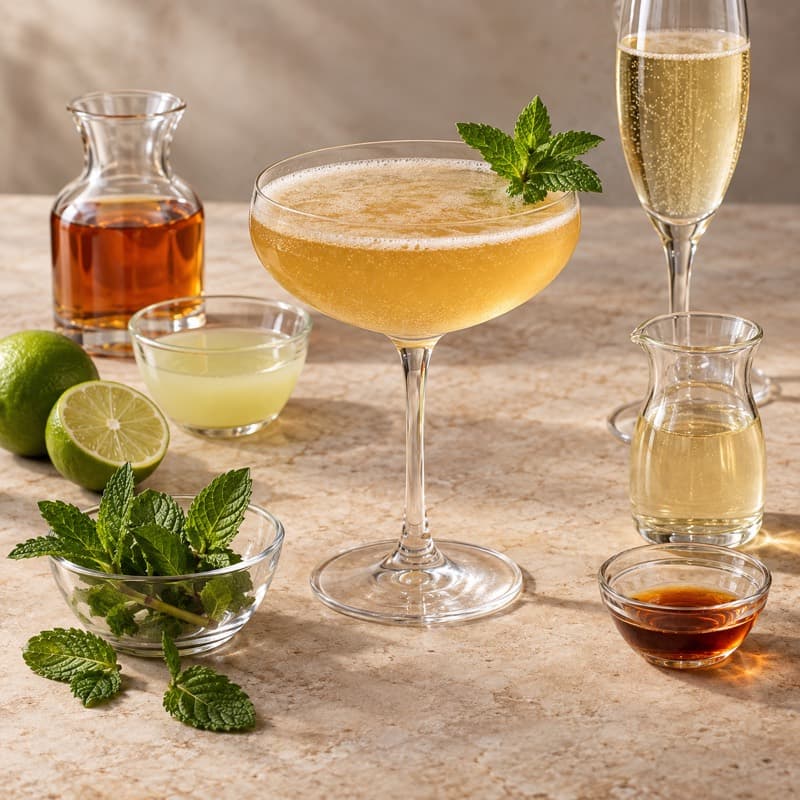
Old Cuban recipe
1 serving · IBA reference recipeMillilitres control this recipe. US fluid ounces are rounded to the nearest quarter ounce for convenience and are not a different recipe ratio. Dashes, spoons, leaves and other non-liquid measures are listed as written.
| Measure | Ingredient |
|---|---|
| 45 ml≈ 1.5 US fl oz | aged rum |
| 22.5 ml≈ 0.75 US fl oz | fresh lime juice |
| 30 ml≈ 1 US fl oz | simple syrup, 1:1 by mass |
| 8 leaves | fresh mint |
| 2 dashes | Angostura aromatic bitters |
| 60 ml≈ 2 US fl oz | chilled Brut Champagne or Prosecco |
Ice: Preparation ice only; no serving ice. Garnish: 1 mint sprig.
Learning bar service? Continue with the Old Cuban in module 7 of the free course →
How to make it
- Chill the serving glass; keep the sparkling mixer separate.
- Measure the still ingredients into a shaker with fresh ice and shake to chill.
- Pour the base through a strainer into the chilled glass; fine strain herbs if needed.
- Add the measured cold sparkling ingredient gently, combine carefully and garnish.
Why it works: Aged rum and sparkling wine form a different structure from the Mojito. Mint is shaken in the base and wine is added after straining.
Common mistakes, useful fixes
Unrecorded substitution
Do not infer birthplace from the name; describe the reference ingredients and disclose that the historical attribution needs checking.
Inconsistent finish
check the exact measures, products and preparation sequence.
Unclear guest expectation
explain this specification before preparing.
Serving the guest
What to tell the guest
Aged rum, mint, lime and sparkling wine. Do not infer birthplace from the name; describe the reference ingredients and disclose that the historical attribution needs checking.
Dietary and product checks
Check all exact product labels and relevant guest restrictions; no generic recipe guarantees safety.
Variations
- Any variant must be named and recorded. Do not infer birthplace from the name; describe the reference ingredients and disclose that the historical attribution needs checking.
Where does the Old Cuban come from?
Origin: New York, United States; creator-attributed recipe publication names Audrey Saunders and Bemelmans Bar in 2002. (Attributed venue/creator account or documented cultural context; limits stated)
Imbibe’s recipe credited to Audrey Saunders places the Old Cuban’s introduction at Bemelmans Bar in 2002. Its account describes a Mojito-inspired transformation using aged rum, bitters and Champagne. Attribute that account rather than inferring a Cuban birthplace from the name. The course retains its separately identified IBA specification and disclosed house choices.
Old Cuban questions
What is the key decision in this study?
Aged rum and sparkling wine form a different structure from the Mojito. Mint is shaken in the base and wine is added after straining.
The guest asks if the name proves it was invented in Cuba.
Do not infer birthplace from the name; describe the reference ingredients and disclose that the historical attribution needs checking.
From a recipe to a repeatable skill
Learn the method behind the order.
Old Cuban is a required study in Advanced Cocktails & Refined Bar Service, module 7: Sparkling integration and refined delivery. Integrate mint, aged rum and sparkling wine while managing delivery timing.
The course is free. An optional paid certificate tests knowledge in an online exam; it is not an observed practical assessment or an accredited bartending qualification.