The cocktail notebook · Brandy & grape spirit · Wine & aperitif
Champagne Cocktail
Sparkling wine, aromatic bitters, gentle sweetness and cognac. A built sparkling cocktail made by stir.
- Base
- Champagne + cognac in our IBA reference
- Method
- Stir
- Glass
- Large chilled Champagne glass
- Yield
- One drink
Recipe reference: IBA reference recipe. Optional Grand Marnier omitted. Cube target 4 g is a house standard.
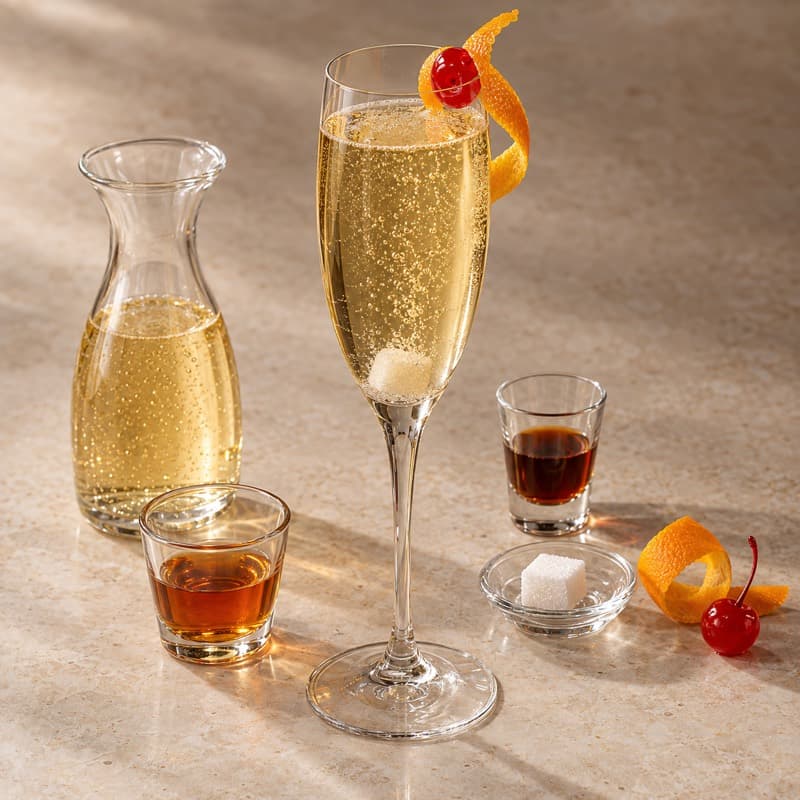
Champagne Cocktail recipe
1 serving · IBA reference recipeMillilitres control this recipe. US fluid ounces are rounded to the nearest quarter ounce for convenience and are not a different recipe ratio. Dashes, spoons, leaves and other non-liquid measures are listed as written.
| Measure | Ingredient |
|---|---|
| 90 ml≈ 3 US fl oz | chilled Champagne |
| 10 ml≈ 0.25 US fl oz | cognac |
| 2 dashes | Angostura aromatic bitters |
| 1 cube, target 4 g | white sugar, house cube size |
Ice: No serving ice. Garnish: Orange zest and maraschino cherry.
Learning bar service? Continue with the Champagne Cocktail in module 7 of the free course →
How to make it
- Place the sugar cube in the glass and wet it with two dashes of bitters.
- Add measured cognac.
- Pour Champagne slowly, watching the foam and leaving headroom.
- Add orange zest and cherry gently; serve without heavy stirring.
Why it works: The cube gradually releases sweetness while gentle pouring retains bubbles.
Common mistakes, useful fixes
Overflow
leave headroom and pour slowly.
Over-sweet
use the specified cube, not several loose spoonfuls.
Wine hidden
do not add the optional liqueur automatically.
Serving the guest
What to tell the guest
The bitters-soaked sugar cube adds aroma and gradually changes the drink as it dissolves.
Dietary and product checks
Wine may contain sulphites; check cherries, bitters and any optional liqueur.
Variations
- IBA allows a few drops of Grand Marnier; this course omits it.
- A non-Champagne sparkling wine is a disclosed house variation.
Where does the Champagne Cocktail come from?
Origin: United States cocktail-book repertoire; documented in 1862. (Dated printed predecessor; modern recipe differs)
Jerry Thomas printed a Champagne Cocktail in 1862, making it a useful historical reference for sparkling cocktails. That version used sugar, bitters, lemon peel and wine over broken ice; it was not identical to today’s IBA version with cognac. Teaching the difference prevents a common error: calling a modern specification an unchanged nineteenth-century original. The current lesson is about gentle construction and presentation. A bitters-soaked sugar cube forms the base, cognac adds another flavour layer, and cold Champagne finishes the drink. The wine should remain recognisable rather than becoming a vehicle for excessive sweetness.
Champagne Cocktail questions
How much cognac is used?
10 ml.
Does this match the 1862 recipe exactly?
No. The earlier printed version differs in ingredients and service.
From a recipe to a repeatable skill
Learn the method behind the order.
Champagne Cocktail is a required study in Advanced Cocktails & Refined Bar Service, module 7: Sparkling integration and refined delivery. Contrast bitters, sugar and wine service with French 75; record the chosen reference version.
The course is free. An optional paid certificate tests knowledge in an online exam; it is not an observed practical assessment or an accredited bartending qualification.