
The cocktail notebook · Rum & cane spirit
Piña Colada
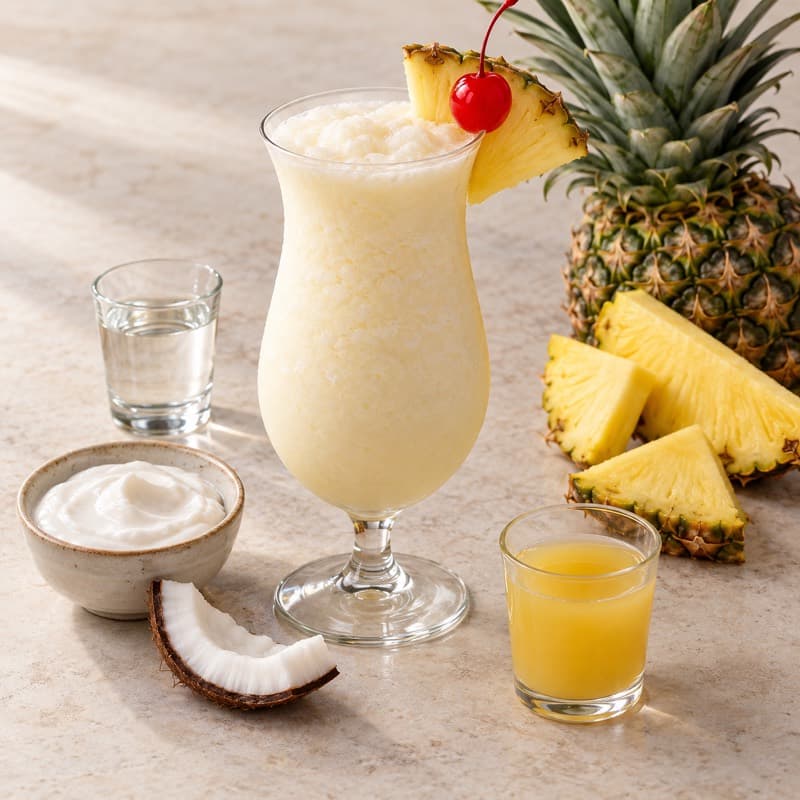
Creamy coconut, pineapple and rum; thick, pale ivory texture. A blended tropical cocktail made by stir and blend.
- Base
- white rum
- Method
- Stir & Blend
- Glass
- Large hurricane / tall cocktail glass
- Yield
- One drink
Recipe reference: IBA reference recipe. IBA does not quantify ice or coconut sweetness. Sweetened product and 120 g ice are house choices requiring blender/product testing before service.
Piña Colada recipe
1 serving · IBA reference recipeMillilitres control this recipe. US fluid ounces are rounded to the nearest quarter ounce for convenience and are not a different recipe ratio. Dashes, spoons, leaves and other non-liquid measures are listed as written.
| Measure | Ingredient |
|---|---|
| 50 ml≈ 1.75 US fl oz | white rum |
| 30 ml≈ 1 US fl oz | coconut cream, sweetened cream of coconut chosen for this house version |
| 50 ml≈ 1.75 US fl oz | fresh pineapple juice |
| 120 g | crushed ice, house blender starting load |
Ice: 120 g crushed ice blended in; adjust only through a recorded venue trial. Garnish: Pineapple slice and cocktail cherry.
Learning bar service? Continue with the Piña Colada in module 6 of the free course →
How to make it
- Stir the coconut product until uniform and measure all liquids.
- Weigh crushed ice into the blender and add the liquids.
- Secure the lid and blend until smooth, without visible ice chunks.
- Pour into the large glass and garnish; offer a suitable straw if wanted.
Why it works: Blending incorporates ice into the texture. Standardising the coconut product and ice prevents large batch-to-batch differences.
Common mistakes, useful fixes
Too thin
check ice mass and juice measure.
Too sweet
check that the selected coconut product matches the house specification.
Separated or lumpy
stir the coconut product before measuring and blend evenly.
Serving the guest
What to tell the guest
This is a blended pineapple-and-coconut drink; our coconut product is sweetened.
Dietary and product checks
Contains coconut; individual allergies remain possible. Some coconut products or cherries contain other allergens or additives; check labels.
Variations
- A shaken version has a different texture and requires its own specification.
- An alcohol-free version needs rebalancing after removing rum; do not promise identical flavour.
Where does the Piña Colada come from?
Origin: San Juan, Puerto Rico; prominent mid-20th-century claims. (Competing claims; Hilton attribution stated as a claim)
Piña Colada means “strained pineapple”. Hilton attributes its familiar rum, coconut and pineapple version to Ramón “Monchito” Marrero at Caribe Hilton in San Juan in 1954. Other origin claims exist, so the hotel’s account should be identified rather than treated as the only possible history. This lesson uses the IBA quantities as a starting point and makes the coconut product and ice load explicit for training. Cream of coconut, unsweetened coconut cream and coconut milk are different products. Choosing between them changes sweetness and texture; the name alone cannot ensure the right result.
Piña Colada questions
What controls the frozen texture?
The ice load, blender action and liquid/product specification.
Is coconut cream the same as coconut milk?
No; composition and thickness differ.
From a recipe to a repeatable skill
Learn the method behind the order.
Piña Colada is a required study in Essential Cocktails & Bar Foundations, module 6: Coffee, cream and blended service. Teach blending and coconut-product selection.
The course is free. An optional paid certificate tests knowledge in an online exam; it is not an observed practical assessment or an accredited bartending qualification.