
The cocktail notebook · Vodka
Espresso Martini
Coffee-forward, bitter-sweet, dark brown with a tan foam cap. A shaken coffee cocktail made by shake and strain.
- Base
- vodka
- Method
- Shake & Strain
- Glass
- Chilled coupe / cocktail glass
- Yield
- One drink
Recipe reference: IBA reference recipe. IBA specifies one strong espresso and undefined sugar syrup; house targets 30 ml espresso and 1:1 syrup.
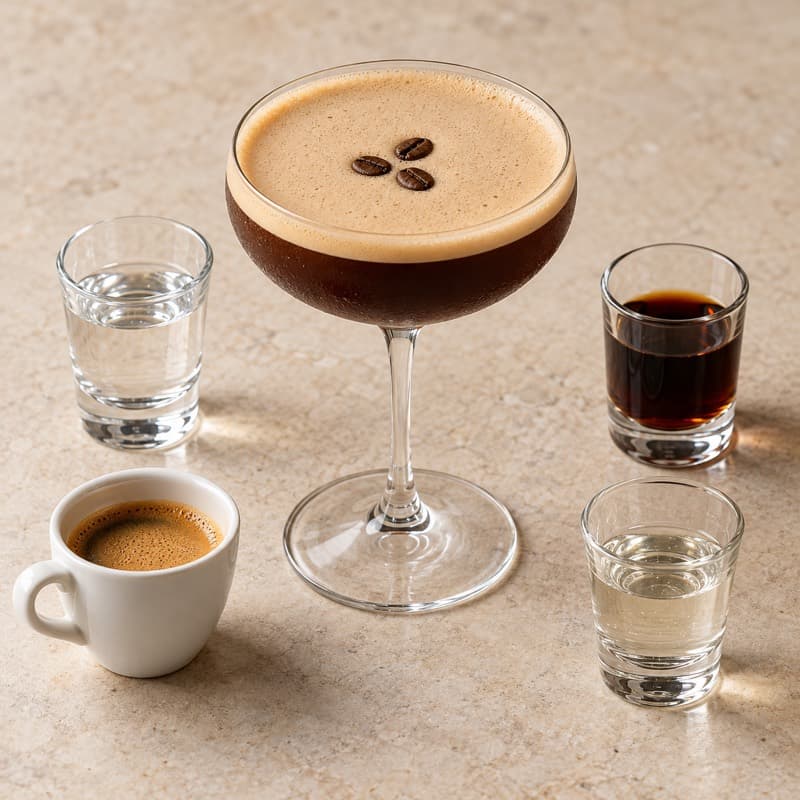
Espresso Martini recipe
1 serving · IBA reference recipeMillilitres control this recipe. US fluid ounces are rounded to the nearest quarter ounce for convenience and are not a different recipe ratio. Dashes, spoons, leaves and other non-liquid measures are listed as written.
| Measure | Ingredient |
|---|---|
| 50 ml≈ 1.75 US fl oz | vodka |
| 30 ml≈ 1 US fl oz | Kahlúa coffee liqueur |
| 10 ml≈ 0.25 US fl oz | simple syrup, 1:1 by mass |
| 1 espresso, target 30 ml | fresh strong espresso; record venue extraction |
Ice: Cubed ice for shaking only. Garnish: 3 coffee beans.
Learning bar service? Continue with the Espresso Martini in module 6 of the free course →
How to make it
- Pull the espresso into a small vessel; allow it to stop steaming before sealing a shaker.
- Measure vodka, liqueur, syrup and espresso into the shaker.
- Add ice and shake firmly until chilled and aerated.
- Strain into the chilled glass; place three beans gently on the foam.
Why it works: A consistent espresso extraction and firm shake create repeatable coffee flavour and foam.
Common mistakes, useful fixes
Thin foam
check espresso quality and shaking technique.
Too sweet
verify liqueur identity and syrup measure.
Watery
avoid leaving warm coffee on ice before shaking.
Serving the guest
What to tell the guest
It has coffee foam rather than cream, and it still contains alcohol.
Dietary and product checks
Contains caffeine unless an appropriate decaf specification is used; verify liqueur labels and any milk contamination from coffee equipment.
Variations
- Different coffee liqueurs change sweetness and must be tested.
- Decaffeinated espresso reduces coffee caffeine but does not remove alcohol.
Where does the Espresso Martini come from?
Origin: Soho, London, United Kingdom; mid-1980s, Dick Bradsell. (Creator-family account; exact year avoided)
Bea Bradsell describes her father Dick creating the drink at Soho Brasserie in London during the mid-1980s. Her account says an early version was called Vodka Espresso and served over ice; the recipe and presentation developed later. This is more useful than repeating an unverified celebrity’s name. The word Martini here describes the later glass-and-menu convention, not a gin-and-vermouth formula. For a bartender, the coffee deserves as much attention as the vodka: extraction, temperature and sweetness affect the result. The foam comes from a vigorous shake and the coffee, not added dairy cream.
Espresso Martini questions
Why is it not a classic Martini formula?
It contains vodka, coffee liqueur, espresso and syrup rather than gin and vermouth.
What produces the foam?
The coffee and vigorous shaking; no dairy cream is included.
From a recipe to a repeatable skill
Learn the method behind the order.
Espresso Martini is a required study in Essential Cocktails & Bar Foundations, module 6: Coffee, cream and blended service. Coordinate fresh coffee, chilling and shaking for consistent texture.
The course is free. An optional paid certificate tests knowledge in an online exam; it is not an observed practical assessment or an accredited bartending qualification.