
The cocktail notebook · Rum & cane spirit
Mojito
Fresh mint, lime, rum and gentle sweetness, lengthened with soda. A mint rum highball made by build.
- Base
- white Cuban-style rum
- Method
- Build
- Glass
- Highball, large enough for herbs, liquids and ice
- Yield
- One drink
Recipe reference: IBA reference recipe. IBA lists six mint sprigs and two teaspoons, with no soda quantity. House uses 5 ml level teaspoons, small consistent sprigs and 60 ml soda; garnish additional.
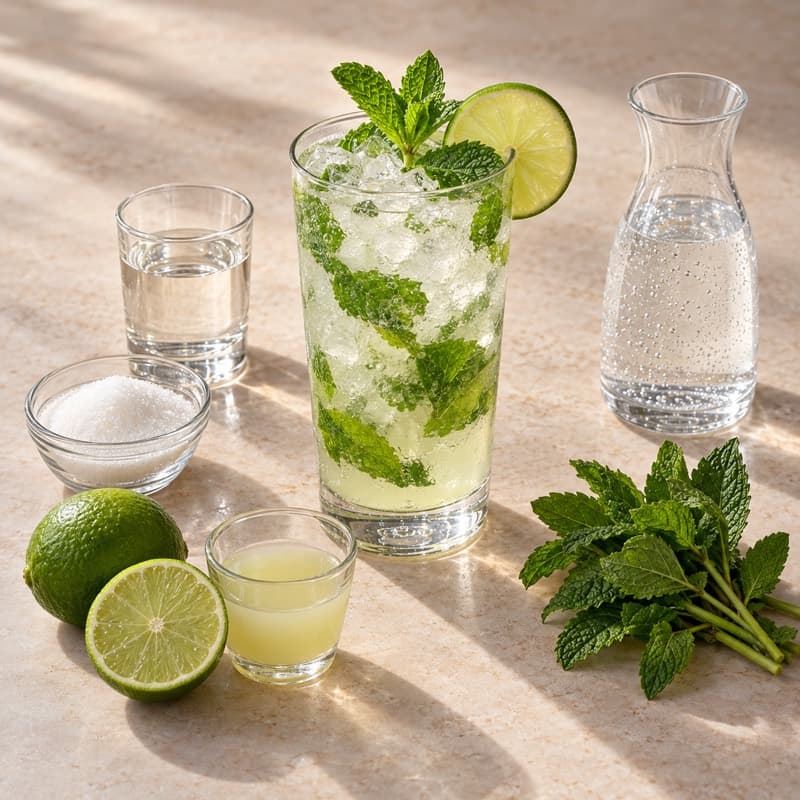
Mojito recipe
1 serving · IBA reference recipeMillilitres control this recipe. US fluid ounces are rounded to the nearest quarter ounce for convenience and are not a different recipe ratio. Dashes, spoons, leaves and other non-liquid measures are listed as written.
| Measure | Ingredient |
|---|---|
| 45 ml≈ 1.5 US fl oz | white Cuban-style rum |
| 20 ml≈ 0.75 US fl oz | fresh lime juice |
| 6 small sprigs | fresh mint; washed and sound |
| 2 level teaspoons | white cane sugar |
| 60 ml total | chilled soda water, measured house quantity |
Ice: Fresh cubed ice, fill remaining space. Garnish: Mint sprig and lime slice.
Learning bar service? Continue with the Mojito in module 4 of the free course →
How to make it
- In the glass dissolve the sugar in lime and 15 ml of the soda.
- Add mint and press lightly once or twice; do not grind the leaves.
- Fill with ice, measure rum and add the remaining 45 ml soda.
- Lift gently from the bottom to mix; garnish with mint and lime.
Why it works: Light pressure releases aroma; dissolving sugar avoids a gritty base. Soda is split to help mixing without heavy agitation.
Common mistakes, useful fixes
Bitter herb fragments
reduce muddling pressure.
Sugar left at bottom
dissolve before filling with ice.
Uneven flavour
lift the mixture rather than stirring only at the top.
Serving the guest
What to tell the guest
We press the mint gently so the drink stays fresh and aromatic.
Dietary and product checks
Wash herbs and check ingredients; do not assume a garnish is exempt from food handling.
Variations
- A syrup version needs a defined sugar concentration and measured replacement.
- Fruit versions add water, acid and sugar and need separate balancing.
Where does the Mojito come from?
Origin: Cuba; exact inventor and name derivation uncertain. (Cuban association; older invention legends unverified)
The Mojito is associated with Cuba, but its precise invention and name are not settled. Even Bacardi’s account acknowledges competing explanations of the name. Avoid presenting a privateer, a medical remedy or a famous writer’s favourite bar as proven origin evidence. The practical story is a mint-flavoured rum-and-lime drink lengthened with soda. Its freshness depends on treating the herb carefully: you want aroma, not shredded leaves throughout the glass. This reference uses sugar, while many bars use syrup. Both choices can work, but their measures and methods should be stated rather than mixed together.
Mojito questions
Why avoid grinding mint?
It creates fragments and can produce an unpleasant herb flavour.
How much soda is in this house version?
60 ml in total, split between dissolving and finishing.
From a recipe to a repeatable skill
Learn the method behind the order.
Mojito is a required study in Essential Cocktails & Bar Foundations, module 4: Fresh ingredients and finishing. Combine gentle herb handling with build order and carbonation.
The course is free. An optional paid certificate tests knowledge in an online exam; it is not an observed practical assessment or an accredited bartending qualification.