
The cocktail notebook · Gin
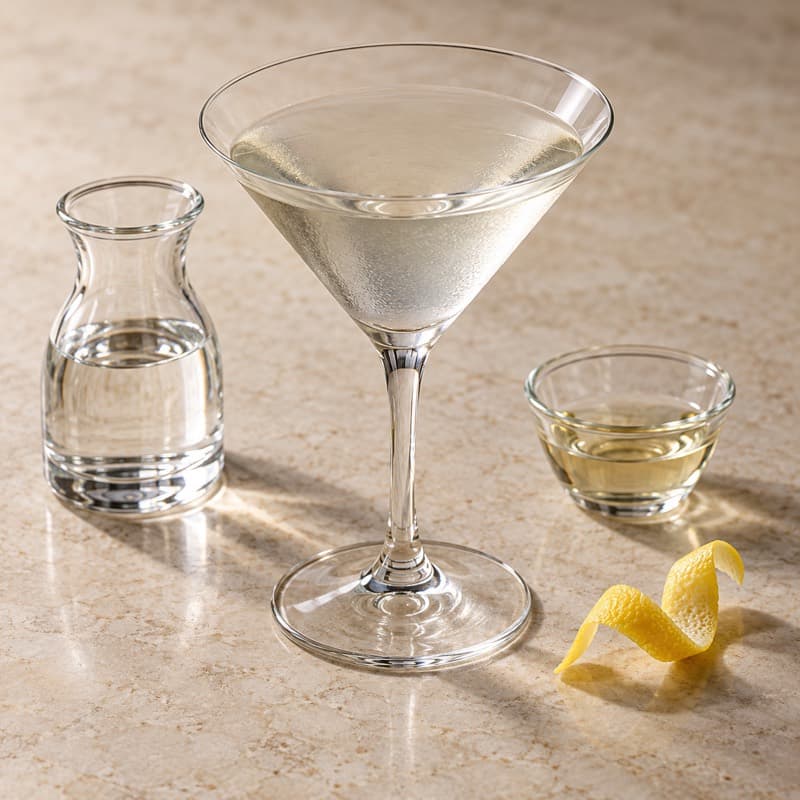
Dry Martini
Very dry, botanical and spirit-forward, with lemon aroma. A spirit-and-vermouth cocktail made by stir and strain.
- Base
- gin
- Method
- Stir & Strain
- Glass
- Chilled Martini / cocktail glass
- Yield
- One drink
Recipe reference: IBA reference recipe.
Dry Martini recipe
1 serving · IBA reference recipeMillilitres control this recipe. US fluid ounces are rounded to the nearest quarter ounce for convenience and are not a different recipe ratio. Dashes, spoons, leaves and other non-liquid measures are listed as written.
| Measure | Ingredient |
|---|---|
| 60 ml≈ 2 US fl oz | gin |
| 10 ml≈ 0.25 US fl oz | dry vermouth |
Ice: Cubed ice for stirring only. Garnish: Expressed lemon peel; green olive only if requested.
Learning bar service? Continue with the Dry Martini in module 5 of the free course →
How to make it
- Chill the serving glass; empty any chilling water before pouring.
- Measure gin and dry vermouth into a mixing glass and add ice.
- Stir smoothly until well chilled; avoid whipping air into the mixture.
- Strain without serving ice and express lemon oil over the surface.
Why it works: Stirring produces chilling and dilution with a clear, smooth presentation. Dry vermouth is a measured ingredient, not an optional rinse in this version.
Common mistakes, useful fixes
Warm first sip
chill the serving glass.
Oxidised flavour
check opened vermouth.
Wrong guest order
clarify gin/vodka, garnish and brine.
Serving the guest
What to tell the guest
Would you like gin or vodka, and lemon or olive?
Dietary and product checks
Vermouth may contain sulphites; olives and brines vary. Confirm product details.
Variations
- Vodka Martini changes the base spirit.
- Dirty Martini includes olive brine and needs a stated measure.
- A wetter ratio increases vermouth; use the guest-agreed specification.
Where does the Dry Martini come from?
Origin: United States, late-19th-century repertoire; exact birthplace and name disputed. (Dated printed predecessor; exclusive origin unassigned)
Harry Johnson’s 1888 manual includes a Martini Cocktail using Old Tom gin, vermouth and additional sweetening and flavouring. That printed drink differs from the dry modern formula taught here. It shows why the Martini should be understood as an evolving family, rather than a recipe that appeared fully formed in one famous bar. The course’s reference is gin with a small measure of dry vermouth. Its name alone does not tell you every guest’s preference: clarify base spirit, dryness, garnish and whether brine is wanted before preparing a personalised version.
Dry Martini questions
Which vermouth style is used?
Dry vermouth, 10 ml.
Does dry mean adding olive brine?
No. Brine is a separate dirty-Martini modification.
From a recipe to a repeatable skill
Learn the method behind the order.
Dry Martini is a required study in Essential Cocktails & Bar Foundations, module 5: Classic orders and guest clarification. Clarify spirit, vermouth preference and garnish; teach chilled served-up service.
The course is free. An optional paid certificate tests knowledge in an online exam; it is not an observed practical assessment or an accredited bartending qualification.