
The cocktail notebook · Vodka
Bloody Mary
Savoury tomato, lemon and adjustable pepper heat. A savoury tomato cocktail made by stir and strain.
- Base
- vodka
- Method
- Stir & Strain
- Glass
- Highball for the on-ice version taught here
- Yield
- One drink
Recipe reference: IBA reference recipe. IBA seasoning is to taste. This house starting point uses two hot-sauce drops and small pinches; adjust only after checking preference. Highball over ice follows IBA’s on-ice option.
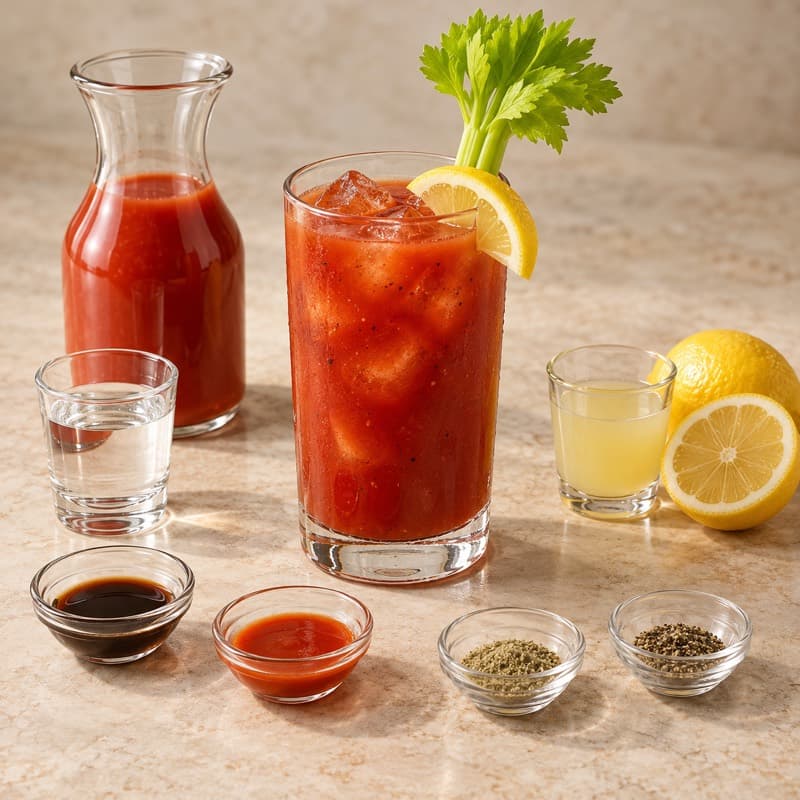
Bloody Mary recipe
1 serving · IBA reference recipeMillilitres control this recipe. US fluid ounces are rounded to the nearest quarter ounce for convenience and are not a different recipe ratio. Dashes, spoons, leaves and other non-liquid measures are listed as written.
| Measure | Ingredient |
|---|---|
| 45 ml≈ 1.5 US fl oz | vodka |
| 90 ml≈ 3 US fl oz | tomato juice |
| 15 ml≈ 0.5 US fl oz | fresh lemon juice |
| 2 dashes | Worcestershire sauce |
| 2 drops initially | Tabasco-style hot sauce, house starting point |
| 1 small pinch each | celery salt and black pepper, adjust by agreement |
Ice: Mix with ice; strain over fresh serving cubes. Garnish: Optional celery stalk and lemon wedge.
Learning bar service? Continue with the Bloody Mary in module 5 of the free course →
How to make it
- Ask about heat and dietary requirements; check sauce labels.
- Combine measured ingredients in a mixing vessel with ice.
- Stir gently until uniform and chilled; avoid frothy shaking.
- Strain over fresh highball ice and add agreed garnish.
Why it works: Gentle mixing keeps the tomato texture controlled. Seasoning starts modestly because sauces and preferences vary.
Common mistakes, useful fixes
Too hot
start low and confirm preference.
Unexpected fish allergen
check Worcestershire rather than assuming vegetarian.
Frothy texture
stir gently instead of vigorous shaking.
Serving the guest
What to tell the guest
How spicy would you like it, and do you have any dietary requirements?
Dietary and product checks
Celery; Worcestershire commonly contains fish and may contain other allergens. Check sauces, tomato products and cross-contact.
Variations
- Virgin Mary omits vodka and requires a separate balanced house spec.
- A verified vegetarian Worcestershire changes the product; label and test it.
Where does the Bloody Mary come from?
Origin: France / United States origin accounts; important New York refinement in 1934. (Competing origin stories; St. Regis refinement attributed)
The Bloody Mary has competing origin accounts, so it is better to distinguish development from invention. St. Regis credits Fernand Petiot with refining the vodka-and-tomato recipe at its New York King Cole Bar in 1934 and associates it with the Red Snapper name. This does not settle every earlier claim. Its service lesson is especially practical: seasoning belongs to the guest conversation. A request for less heat does not mean less lemon, and a vegetarian guest needs more than a promise to remove garnish. Traditional Worcestershire sauce commonly contains fish, so product verification matters.
Bloody Mary questions
What supplies the main acidity?
15 ml fresh lemon juice.
Which sauce can contain fish?
Worcestershire sauce.
From a recipe to a repeatable skill
Learn the method behind the order.
Bloody Mary is a required study in Essential Cocktails & Bar Foundations, module 5: Classic orders and guest clarification. Clarify spice and dietary requests and check savoury sauce ingredients.
The course is free. An optional paid certificate tests knowledge in an online exam; it is not an observed practical assessment or an accredited bartending qualification.