
The cocktail notebook · Rum & cane spirit
Daiquiri
Bright lime, clean rum and controlled sweetness; pale and lightly cloudy. A rum sour made by shake and stir and strain.
- Base
- white Cuban-style rum
- Method
- Shake & Stir & Strain
- Glass
- Chilled coupe / cocktail glass
- Yield
- One drink
Recipe reference: IBA reference recipe. IBA says two bar spoons without defining capacity. Training convention: two level 5 ml spoons; sugar mass varies, so record the actual sugar and spoon used.
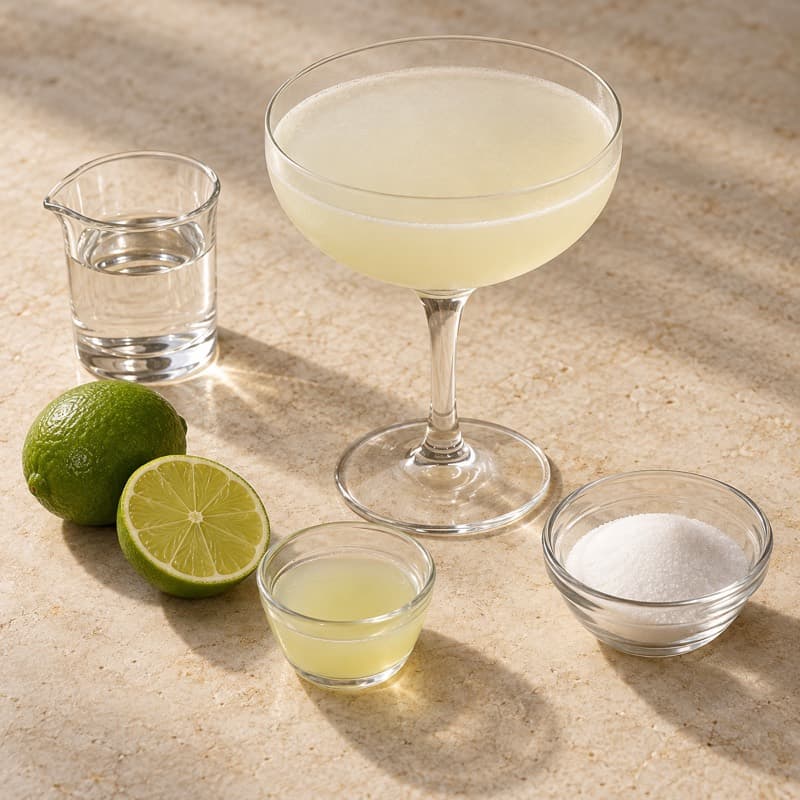
Daiquiri recipe
1 serving · IBA reference recipeMillilitres control this recipe. US fluid ounces are rounded to the nearest quarter ounce for convenience and are not a different recipe ratio. Dashes, spoons, leaves and other non-liquid measures are listed as written.
| Measure | Ingredient |
|---|---|
| 60 ml≈ 2 US fl oz | white Cuban-style rum |
| 20 ml≈ 0.75 US fl oz | fresh lime juice |
| 2 level bar spoons | superfine sugar |
Ice: Cubed ice for shaking only. Garnish: None.
Learning bar service? Continue with the Daiquiri in module 3 of the free course →
How to make it
- Combine rum, lime and sugar in the shaker without ice.
- Stir until no visible sugar grains remain.
- Add cubed ice and shake until cold.
- Strain into the chilled glass without serving ice.
Why it works: Dissolving sugar first prevents a gritty last sip. The IBA reference specifies sugar rather than syrup.
Common mistakes, useful fixes
Gritty
dissolve sugar before adding ice.
Over-sweet
use the same level spoon every time.
Wrong expectation
distinguish a classic shaken version from frozen fruit variants.
Serving the guest
What to tell the guest
The classic version is rum, lime and sugar, shaken and served without ice.
Dietary and product checks
Check exact rum and cross-contact controls. No egg or dairy is included in this specification.
Variations
- Frozen fruit Daiquiris require separate fruit and ice specifications.
- A syrup-based house version must state syrup concentration and quantity; it is not a direct volume swap.
Where does the Daiquiri come from?
Origin: Daiquirí, Cuba; commonly linked to Jennings Cox around the turn of the 20th century. (Attributed account; no exact invention date asserted)
The drink takes its name from Daiquirí in Cuba. Bacardi associates its development with American mining engineer Jennings Cox, while the wider combination of rum, lime and sugar does not depend on one person’s invention. Havana bartenders later developed their own versions. The useful surprise for many learners is that a basic Daiquiri need not be frozen, red or full of fruit. This course teaches a short shaken rum sour without garnish. Its small ingredient list makes precision visible: poorly dissolved sugar or an incorrect lime measure cannot hide behind a long list of mixers.
Daiquiri questions
Why stir before shaking?
To dissolve the superfine sugar.
How much white rum is used?
60 ml.
From a recipe to a repeatable skill
Learn the method behind the order.
Daiquiri is a required study in Essential Cocktails & Bar Foundations, module 3: Sours and long sours. Teach the spirit–citrus–sweetener template and accurate shaking.
The course is free. An optional paid certificate tests knowledge in an online exam; it is not an observed practical assessment or an accredited bartending qualification.