
The cocktail notebook · Tequila
Margarita
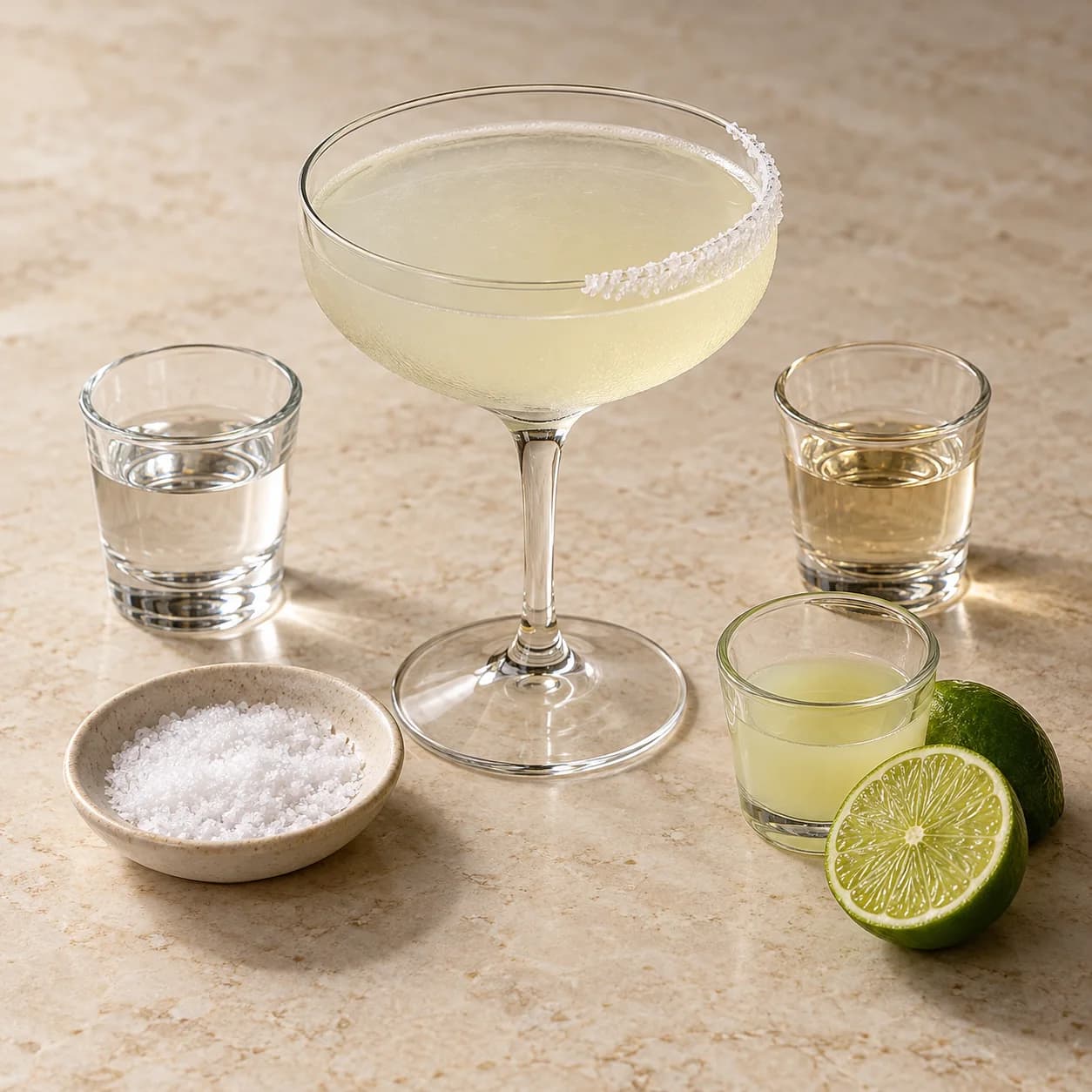
Tequila, orange liqueur and fresh lime. Three measured ingredients make a bright citrus cocktail; a half salt rim leaves the choice with the guest.
- Base
- 100% agave tequila
- Method
- Shake & strain
- Glass
- Chilled coupe or cocktail glass
- Yield
- One cocktail
Recipe reference: International Bartenders Association. Editorial source check: 21 October 2026.
Margarita recipe
1 serving · IBA liquid specificationMillilitres control this recipe. US fluid ounces below are rounded conversions, not a different recipe ratio.
| Measure | Ingredient |
|---|---|
| 50 ml≈ 1.69 US fl oz | 100% agave tequila |
| 20 ml≈ 0.68 US fl oz | triple sec orange liqueur |
| 15 ml≈ 0.51 US fl oz | fresh lime juice |
| Optional | Salt on half the outer rim |
You will also need cubed ice for shaking, a jigger, shaker and strainer. This served-up reference has no serving ice and needs no fruit garnish.
Learning bar service? Continue with the Margarita in module 3 of the free course →
How to make it
- If requested, moisten half the outside rim with lime and touch it to salt; keep salt out of the bowl.
- Measure all liquids into a shaker.
- Fill with cubed ice, seal and shake until cold.
- Strain into the chilled glass and serve without ice.
Shaking chills and dilutes citrus drinks. A half rim lets the guest choose a salted or unsalted sip. Strain promptly so the drink does not continue sitting on the preparation ice.
What each ingredient does
Tequila: the base
The reference specifies 100% agave tequila. Record the bottle you use when comparing versions; changing the spirit and recipe ratio together makes the result harder to assess.
Triple sec: orange & sweetness
Orange liqueur is a measured part of the recipe. Removing it changes both flavour and balance. An agave-sweetened version needs its own specification.
Lime: measured acidity
Use the specified fresh lime juice. A wedge on the rim does not establish a measured juice amount, and switching to lemon is a variation to explain.
Common mistakes, useful fixes
Salt in the drink
Wet and salt only the outside of half the rim. Keep salt out of the bowl and ask whether the guest wants a rim at all.
Unexpectedly harsh or sweet
Check the actual lime measure and orange liqueur first. Verify the preparation before adjusting one variable in a separately recorded version.
Too much dilution
Use a chilled serving glass, shake with preparation ice and strain promptly. Do not leave the finished mix waiting in the shaker.
An unclear dietary request
Check liqueur labels; tequila identity alone does not establish the finished drink’s allergen status. Check exact products and the venue’s preparation controls before making a promise.
Where did the Margarita come from?
Its exact inventor remains disputed. Smithsonian Magazine describes competing accounts associated with Mexico and the United States; those claims do not establish a single proven birthplace. The ingredient recipe used here is a modern IBA reference, not proof of the original formula.
A later milestone is better documented: Smithsonian reports that Dallas restaurateur Mariano Martinez developed a frozen Margarita machine in 1971. That concerns frozen-drink production, not invention of the original shaken cocktail. Read the historical account →
Recognise the variation
Tommy’s Margarita
An agave-sweetened variation has its own formula. Do not simply omit triple sec from this recipe and keep the remaining measures unchanged.
Frozen Margarita
Blending adds another preparation variable: the ice load. Use a separately tested frozen specification rather than treating this shaken recipe as an automatic blender recipe.
Margarita questions
What alcohol is in a Margarita?
This reference uses tequila as its base and triple sec orange liqueur as a modifier. Both contribute alcohol; the lime-juice percentage is not a measure of alcoholic strength.
Is the Margarita recipe always 2:1:1?
No single ratio describes every version. The IBA reference shown here is 50 ml tequila, 20 ml triple sec and 15 ml lime: a 10:4:3 ratio. Name the reference when comparing recipes.
Can I serve it over ice?
The reference here is served up, strained into a chilled glass without serving ice. An on-the-rocks version should have its presentation and serving ice recorded separately.
Do the coloured glass bands show layers or alcohol strength?
Neither. They show the shares of measured starting liquids, before ice dilution. Shaking combines the ingredients, and finished ABV requires the actual bottle strengths and diluted finished volume.
From a recipe to a repeatable skill
Learn the method behind the order.
The foundations course puts Margarita alongside measuring, shaking, service scenarios and other essential drink studies. Use it to practise accurate preparation decisions rather than memorising a list of names.
Knowledge assessment and observed practical competence are different. Check the course and certificate pages for the current offer and assessment terms.
Sources & editorial notes
- IBA: Margarita recipe, method and optional half salt rim
- Smithsonian Magazine: competing origin accounts and the frozen machine milestone