
The cocktail notebook · Rum & cane spirit
Mai Tai
Rum-led, lime-bright, orange-fruited and almond-sweet; not a pineapple punch. A rum daisy / tropical sour made by shake.
- Base
- amber Jamaican rum
- Method
- Shake
- Glass
- Double rocks glass
- Yield
- One drink
Recipe reference: IBA reference recipe. IBA simple syrup concentration unspecified; house uses 1:1 by mass. Molasses-based Martinique rum distinction retained.
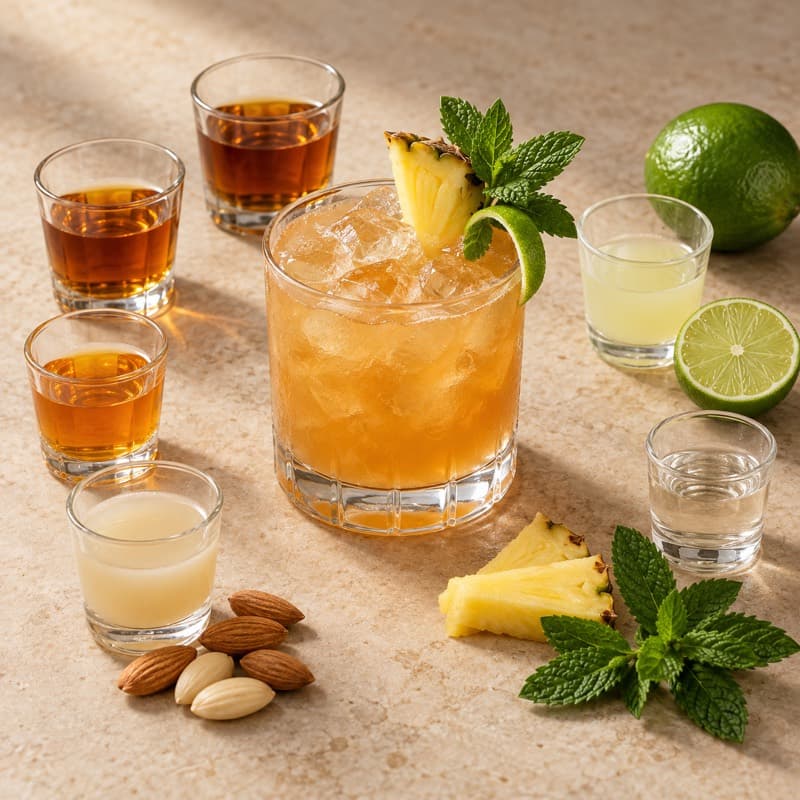
Mai Tai recipe
1 serving · IBA reference recipeMillilitres control this recipe. US fluid ounces are rounded to the nearest quarter ounce for convenience and are not a different recipe ratio. Dashes, spoons, leaves and other non-liquid measures are listed as written.
| Measure | Ingredient |
|---|---|
| 30 ml≈ 1 US fl oz | amber Jamaican rum |
| 30 ml≈ 1 US fl oz | molasses-based Martinique rum, not automatically agricole |
| 15 ml≈ 0.5 US fl oz | orange curaçao |
| 15 ml≈ 0.5 US fl oz | almond orgeat syrup |
| 30 ml≈ 1 US fl oz | fresh lime juice |
| 7.5 ml≈ 0.25 US fl oz | simple syrup, 1:1 by mass |
Ice: Cubed ice for shaking; pour with shaking ice in this IBA-style service. Garnish: Pineapple spear, mint and lime peel.
Learning bar service? Continue with the Mai Tai in module 6 of the free course →
How to make it
- Verify rum styles and disclose almond orgeat.
- Measure all six liquids into a shaker with fresh ice.
- Shake until cold; pour the drink and ice into the double rocks glass.
- Add pineapple spear, mint and lime peel; do not add pineapple juice.
Why it works: Two specified rum styles supply complexity; orgeat adds almond texture and sweetness.
Common mistakes, useful fixes
Wrong rum assumption
Martinique origin does not automatically mean agricole.
Unexpected nut exposure
identify almond orgeat before serving.
Fruit punch result
avoid unlisted pineapple juice or grenadine.
Serving the guest
What to tell the guest
This version has almond orgeat and a rum blend; pineapple is garnish rather than juice.
Dietary and product checks
Contains almond through orgeat; other nuts or ingredients may occur by brand. Check curaçao, syrups and cross-contact.
Variations
- Trader Vic’s original and current business recipes differ from this IBA blend; label the chosen version.
- Different rum blends require comparison trials while other measures remain fixed.
Where does the Mai Tai come from?
Origin: Oakland, California, United States; Trader Vic’s account dates it to 1944. (Creator’s account reproduced by his business; competing claims acknowledged)
Victor Bergeron’s account, reproduced by Trader Vic’s, places his Mai Tai in Oakland in 1944 and links its name with a Tahitian guest’s appreciative response. Treat the wording and scene as his account. The cocktail belongs to American tropical-bar culture; a Polynesian-inspired name does not make it a traditional Tahitian recipe. Its core lesson is rum, lime, orange liqueur and almond orgeat. The IBA version uses a two-rum blend and specifically identifies molasses-based Martinique rum. Pineapple can appear as garnish, but pineapple juice is not in this reference recipe.
Mai Tai questions
Which ingredient contains almond?
Orgeat.
Is pineapple juice included?
No in this reference; pineapple is garnish.
From a recipe to a repeatable skill
Learn the method behind the order.
Mai Tai is a required study in Advanced Cocktails & Refined Bar Service, module 6: Rum blends and complex specifications. Compare rum blends and orgeat; handle almond-related ingredient checks.
The course is free. An optional paid certificate tests knowledge in an online exam; it is not an observed practical assessment or an accredited bartending qualification.