Module 1 of 6
Welcoming guests
First impressions, greetings, and the polite forms Italian hospitality runs on.
The first ten seconds
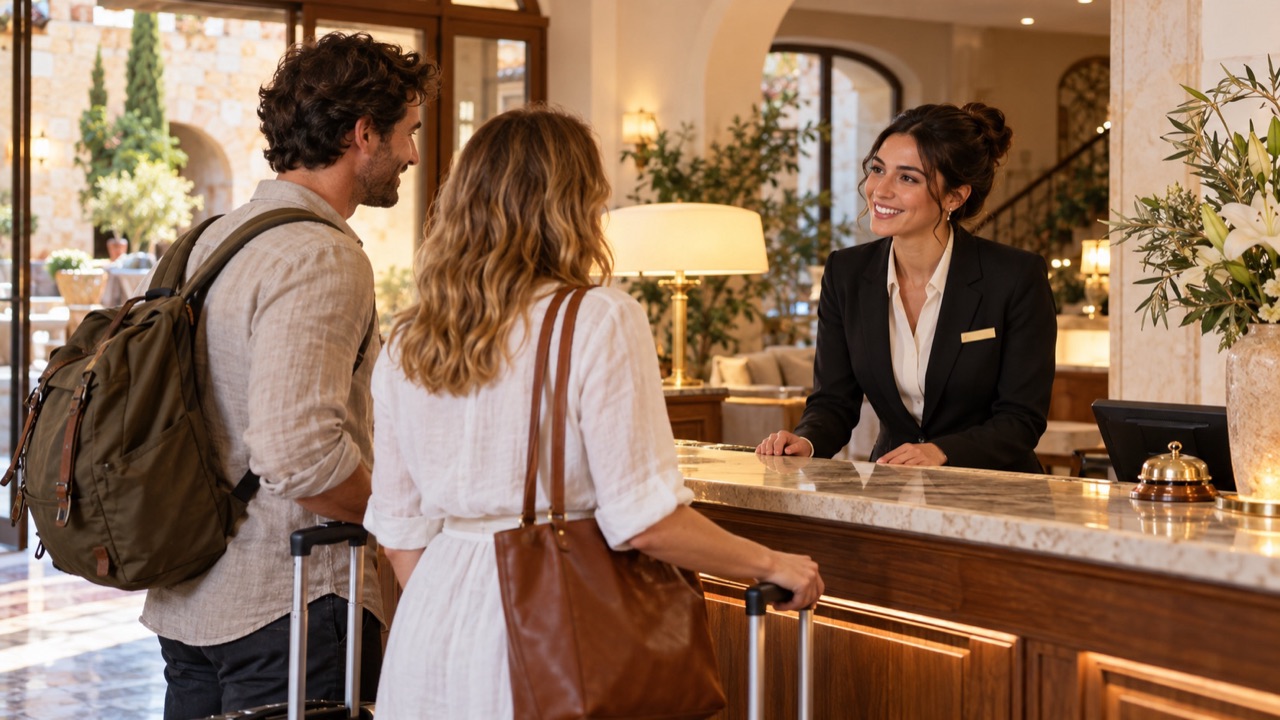
“Buonasera, benvenuti in Hotel Aurora. Come posso aiutarvi?”
Standard evening greeting to a group — 'Good evening, welcome to Hotel Aurora, how can I help you?'
“Bentornato, signor Rossi. Che piacere rivederla.”
Returning guest — 'Welcome back, Mr Rossi, lovely to see you again'; using the name and title builds loyalty
“Sarò subito da lei.”
When you're busy — 'I'll be right with you', formal register, never leaves a guest unacknowledged
The courtesy forms: conditional and 'lei'
“Posso prendere la sua giacca?”
Offering to take a coat — 'May I take your coat?'
“Preferisce un tavolo vicino alla finestra?”
Offering a choice — 'Would you prefer a table by the window?'
“Certo, prego, da questa parte.”
Accepting a request and guiding — 'Certainly, this way please'
Closing warmly
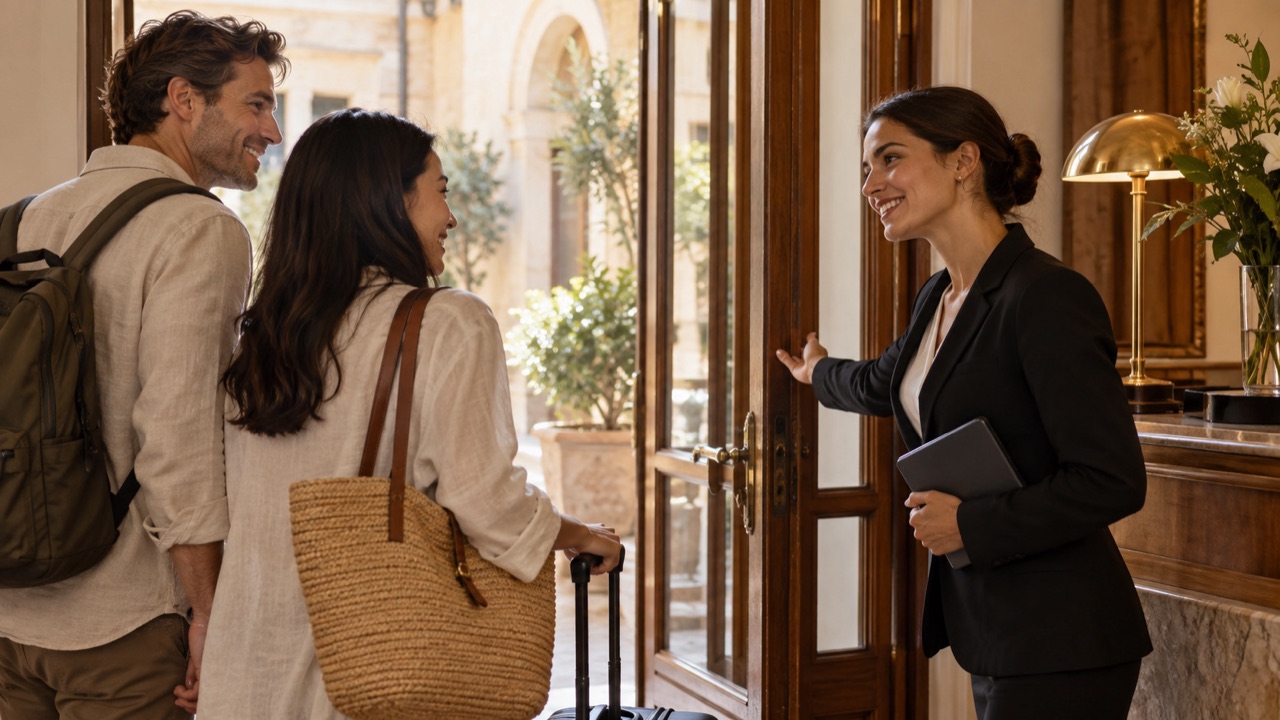
“Le auguro una buona serata.”
Warm evening close — 'I wish you a good evening'
“Buon proseguimento del soggiorno.”
Said mid-stay, not at departure — 'Enjoy the rest of your stay'
“Arrivederci, a presto.”
Farewell with an implied welcome to return — 'Goodbye, see you soon'
Quick Shift Check
What should you do the moment a guest arrives, even if you're in the middle of another task?
Already know this material?
You can take the 20-question exam any time — no need to finish every module first.