
Summer jobs in Italy: a practical guide for seasonal workers
Where the seasonal work is, what it pays, when to apply, and what employers actually ask for - a realistic guide to working a summer season in Italy.
Key Takeaways at a Glance
Season Length
4 – 6 Months (May – Oct)
Net Pay Range
€1,100 – €1,800 / mo
Top Skill Demand
Hospitality English
Room & Board
Provided in ~60% of job ads
Every summer, Italy's tourism industry hires tens of thousands of seasonal workers — in hotels, beach clubs, restaurants, campsites, holiday villages, and bars from the Riviera to Sicily. Most of those jobs don't require a degree, many don't require experience, and the hiring happens in a predictable rhythm you can plan around. This is a realistic guide to how it works.
Where the work is
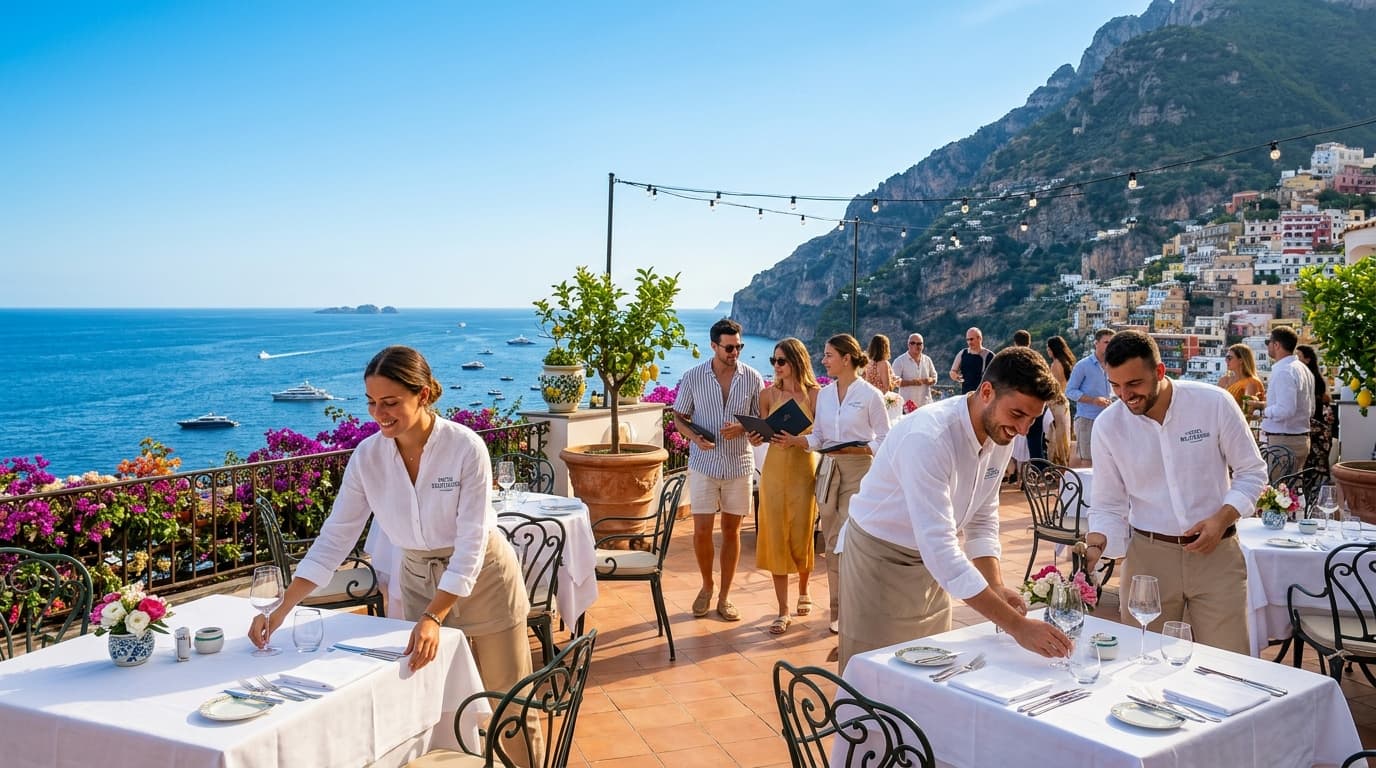
The highest concentration of seasonal jobs follows the tourists: the Adriatic coast (Rimini, Riccione, Jesolo), the lakes (Garda above all), the islands (Sardinia, Sicily, Elba), the Amalfi coast, and the alpine resorts that run a summer hiking season. Cities like Rome, Florence, and Venice hire year-round but spike in summer too.
Holiday villages ('villaggi turistici') and campsite resorts deserve special mention: they hire in bulk, often provide meals and accommodation, and are the most realistic entry point if you have no experience — they expect to train you.
What the jobs pay
Real numbers from current listings: waiters and floor staff typically earn €1,200–1,600 net per month, receptionists €1,250–1,600, bar staff €1,150–1,450, housekeeping €1,000–1,300, and cooks €1,400–2,500 depending on level. Entertainment staff ('animatori') earn less on paper — €800–1,300 — but almost always with room and board included.
Seasonal contracts are fixed-term, usually 4–5 months, under the national collective agreement (CCNL Turismo) for tourism. Tips exist but are modest by American standards — treat them as a bonus, not income.
| Position | Est. Net Monthly Salary | Housing Included? | Experience Required? |
|---|---|---|---|
| Waiter / Floor Server | €1,200 – €1,600 net | Often (65%) | Entry-level to Mid |
| Hotel Receptionist | €1,250 – €1,600 net | Sometimes (45%) | Languages required |
| Bar Staff / Bartender | €1,150 – €1,500 net | Often (60%) | Entry to Mid |
| Housekeeper / Room Attendant | €1,000 – €1,300 net | Frequently (70%) | No prior experience |
| Line Cook / Commis Chef | €1,400 – €2,200 net | Frequently (75%) | Kitchen experience required |
| Resort Animator / Activity Staff | €800 – €1,300 net | Always (100%) | Entry-level / High energy |
Scroll horizontally for full table →
When to apply
Hiring for the summer season runs roughly February to May, and the best positions go early. Apply in late winter or spring and you choose where you work; apply in June and you take what's left — though last-minute openings always exist, because every season someone quits in week two.
Winter seasons in the Alps (December–March) run on the same logic, with hiring in autumn.
What employers actually ask for
We read the job listings so you don't have to. The pattern is remarkably consistent: working English ('inglese operativo') is the single most-requested skill, especially for anything guest-facing. After that: availability for shifts, weekends, and holidays; the ability to handle rush periods; teamwork; and a customer-first attitude. Previous experience is 'preferred but not required' for most entry-level roles.
A few roles have legal requirements: food handling needs the HACCP attestato (a regulated Italian certificate), and lifeguarding needs the brevetto. For everything else, what convinces an employer is evidence you take the work seriously — which is exactly the gap a skills certificate fills.
How to stand out with no experience
Seasonal employers screen fast — often in one phone call. Three things move you up the pile: state your exact availability dates in the first message (whole-season availability wins), show you know what the job involves (mention the service sequence, room turnover, or check-in flow and you sound like week three instead of day one), and attach anything that proves it — a certificate with a verifiable ID beats 'fast learner' on every CV.
Our free courses teach exactly the skills those listings name, and the certificates give you something concrete to attach. Start with Hospitality English — it's the skill employers ask for most.
Hospitality English
The English you actually use on shift — free to learn. Access all study modules free, then take the exam to earn your certificate.