
Sicily vs Sardinia: where to find the better summer hospitality job
Two islands, two very different job markets. Here is how Sicily and Sardinia compare on season length, pay, competition, lifestyle, and what kind of worker each suits best.
Italy's two largest islands both run significant summer tourism economies, but they are not interchangeable. The type of tourism is different, the employers are different, the geography of where work concentrates is different, and the lifestyle of a season on each island is quite different. If you are choosing between them — or deciding which to explore first — here is a real comparison.
Sicily: scale, diversity, and a longer shoulder season
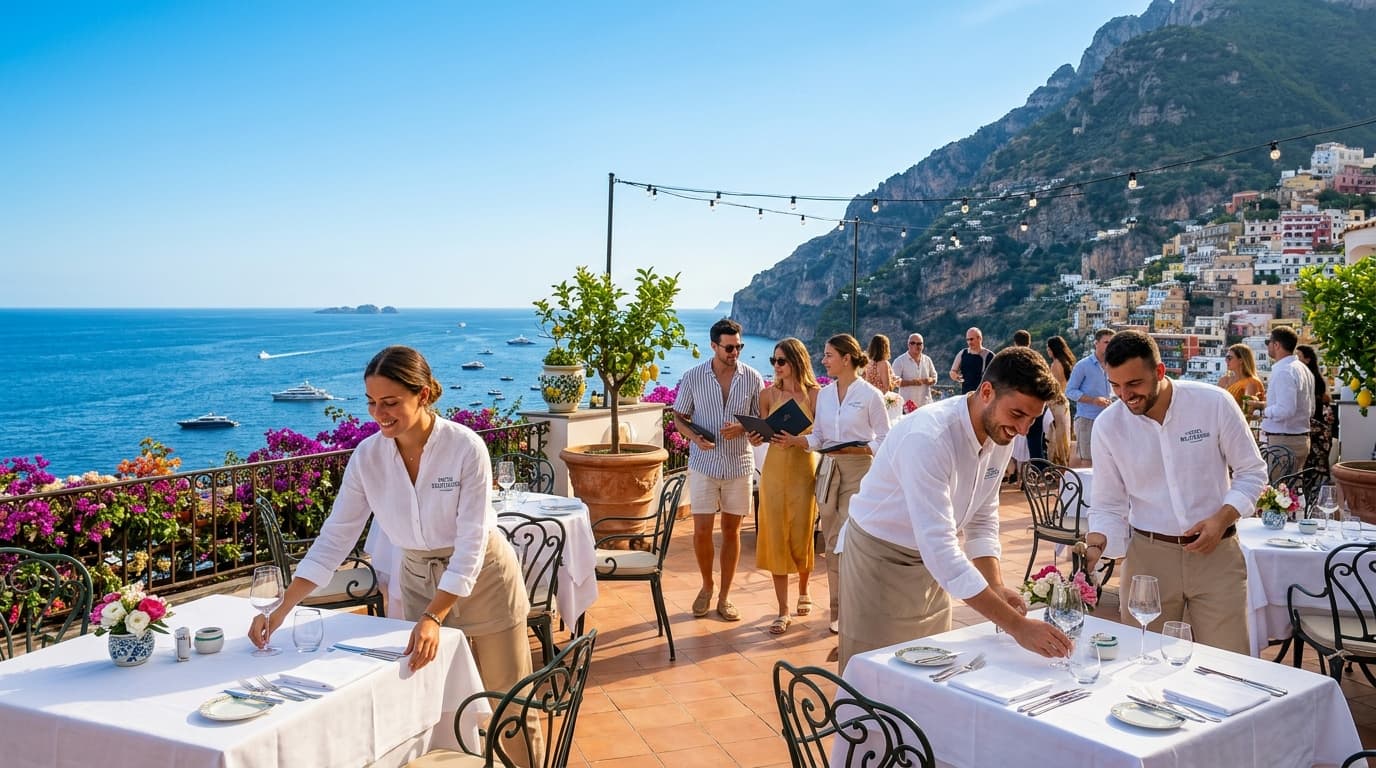
Sicily is the larger island and has a more varied tourism base: beach resort visitors in the south and east (Taormina, Siracusa, Agrigento, Marsala, the Aeolian Islands), city and cultural tourism in Palermo and Catania, and agritourism in the interior. This diversity means the job market is broader: a wider range of employers, a wider range of roles, and slightly more opportunity for people who prefer urban or cultural settings over pure beach resort work.
The season runs longer than Sardinia's at the lower end: some properties in Palermo and Catania operate year-round, and Taormina and Siracusa see meaningful visitor numbers from March through November. If you want a longer contract — six months rather than four — Sicily offers more options. The trade-off is that Sicily's infrastructure is uneven, and some of the most beautiful coastal areas (Scala dei Turchi, Cefalù, the Egadi Islands) are in areas where public transport is limited.
Free Course
Hospitality English
The English you actually use on shift — free to learn.
Pay comparison: what you actually take home
Both islands operate under the national CCNL Turismo, so base wages are legally the same. In practice, Sardinian employers — particularly in the Costa Smeralda area — pay above minimum to attract reliable experienced staff, and tips from wealthy international visitors add meaningfully to take-home. A waiter in Porto Cervo will typically earn more in real terms than the same role in Cefalù.
The cost of living complicates the comparison. Sardinia is expensive: accommodation in the north is scarce and costly during summer if the employer does not provide it. Many Sardinian contracts include board and lodging specifically because housing is otherwise unaffordable for seasonal workers. Sicily is more accessible: private rentals exist at reasonable prices in most towns, and the cost of daily life is lower.
Getting to and around each island
Both islands have multiple airports with good connections to mainland Italy and European cities. Sicily: Palermo and Catania are the main hubs, with connections to Rome, Milan, and beyond. Within Sicily, the train network is functional in the east (Messina–Catania–Siracusa) and limited elsewhere — a car or scooter matters for many coastal locations.
Sardinia: Cagliari, Olbia, and Alghero airports serve different parts of the island. The north (where most upmarket work is) is best reached via Olbia. Within Sardinia the road network is good but public transport is limited outside the main towns. Factor in how you will get to and from work before accepting a contract without accommodation.
Which island suits which worker
Choose Sicily if: you want a longer contract, you prefer a mix of cultural tourism and beach work, you have limited experience and want a lower-pressure environment to develop, or you want the flexibility of urban as well as resort options.
Choose Sardinia if: you have solid hospitality experience and want to work somewhere genuinely premium, you want higher earnings and can handle a shorter contract, the Costa Smeralda brand appeals to you as a career reference, or you simply want one of the most beautiful settings in Europe for a summer.
Either island will teach you more in four months than many hospitality jobs teach in a year. The guests are demanding, the pace is relentless in peak season, and the skills you develop — working English under pressure, handling complaints, coordinating a team at full capacity — are the exact ones that open the next door.
Hospitality English
The English you actually use on shift — free to learn. Access all study modules free, then take the exam to earn your certificate.