
How to write a CV for Italian hospitality jobs (and what gets ignored)
Italian hiring managers read CVs differently. Here is the format that works, the mistakes that kill applications, and what to write when you have limited experience.
An Italian CV for a hospitality job is not the same document as a British or American résumé. The format, the information expected, the length, and the tone are different in ways that consistently trip up foreign applicants. Getting this right is not about gaming the system — it is about not getting silently eliminated before a human being reads what you actually have to offer.
The format that works
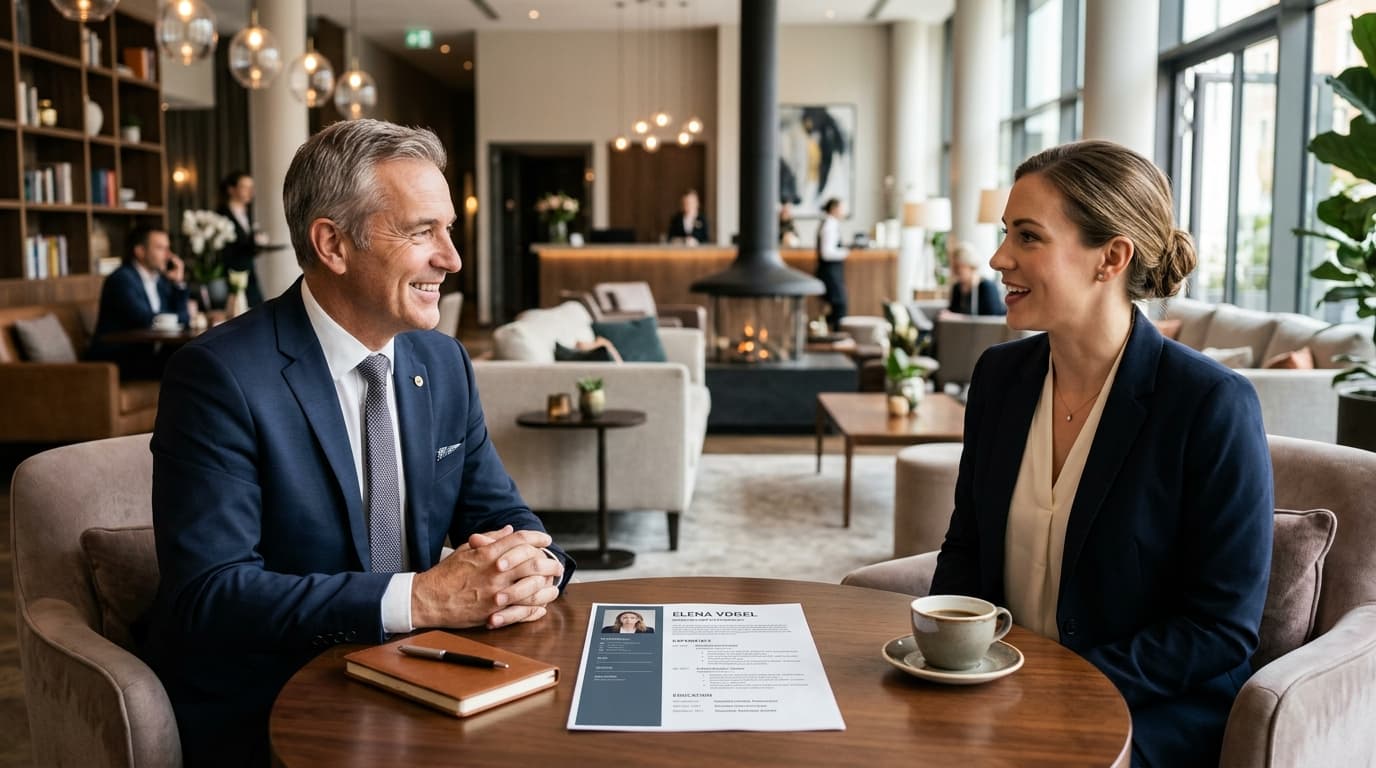
Italian CVs follow the European format more closely than the Anglo-American one: one to two pages maximum, reverse-chronological work history, a photo in the top-right corner, and full personal details including date of birth, nationality, and phone number. The Europass CV template (available free at europass.europa.eu) is genuinely used and genuinely respected in Italy — using it signals you understand the professional context you are applying into.
A photo is not optional. Many foreign applicants omit it because it is discouraged or illegal in the UK and US. In Italy it is standard and expected; sending a CV without one reads as either an oversight or an attempt to hide something. Use a clean, professional headshot — a clear background, business-appropriate clothing, neutral expression.
Free Course
Hospitality English
The English you actually use on shift — free to learn.
Language section: the most important part most people get wrong
For any hospitality role in Italy, the language section of your CV is not a formality — it is often the first thing read. Write it precisely. Use the CEFR levels (A1, A2, B1, B2, C1, C2) for each language rather than vague descriptors like 'conversational' or 'good'. If you have a certificate (Cambridge, IELTS, DELF, Goethe), name it explicitly.
List every language you have any working ability in. German at B1 is worth listing if you are applying to a Garda lake hotel; Spanish at A2 is worth listing for a Sicilian resort. Employers understand and value partial competence — they are building teams, not looking for a single person to cover every language. What they cannot assess from 'basic German' is whether you can say 'your room will be ready in 20 minutes' under pressure.
Work experience: what to write when you have little
Any customer-facing work transfers to hospitality. Retail, airport work, call centres, tour guiding, language teaching, reception at any kind of business — list it, and write one bullet point that translates the skill: 'Handled customer complaints in English and Italian at a high-traffic airport information desk' is specific and relevant in a way that 'customer service' is not.
If your experience is thin, include a voluntary work section. Helped at a family event, assisted at a local festival, organised something? Write it. Italian employers for entry-level seasonal roles are not expecting a full CV — they are looking for evidence of reliability, language ability, and a willingness to work hard in a service environment. Show those things in whatever form you have them.
The cover letter (and why one sentence matters more than two pages)
Italian hospitality employers receive between 50 and 300 CVs for popular seasonal positions. Most cover letters are ignored because they are generic. The one that gets read does one thing: it is specific to the property. Name the hotel. Say one sentence about why that particular hotel, in that particular location, for that particular season. 'I would like to work the summer season at Hotel X because I have been studying Italian for two years and want to build my language skills in a professional environment on the Ligurian coast' is better than three paragraphs of self-praise.
Keep the cover letter to four to six sentences. Your name, the role you are applying for, your availability dates, your relevant languages and experience in one sentence each, and a closing sentence. Nothing more. Put it in the body of the email, not as a separate attachment.
Timing and follow-up
Applications for the summer season should go out in February and March. Hotels plan their seasonal staff needs in January and often make offers by April. If you apply in May or June you are competing for the roles nobody else wanted, or filling gaps left by people who dropped out.
Follow up once, ten to fourteen days after sending, with a brief email: two sentences confirming you sent a CV in late February and asking if they are still accepting applications for the summer. Most applicants do not follow up. The ones who do get remembered. Do not call — email only.
Hospitality English
The English you actually use on shift — free to learn. Access all study modules free, then take the exam to earn your certificate.